


Leading 8 current transducer manufacturer You Should Know
Current transducers convert electrical current into a measurable signal for monitoring, protection, control, and laboratory work. Choosing the right current transducer manufacturer is difficult because suppliers may focus on very different requirements: high-accuracy DC measurement, industrial power monitoring, magnetic-field research, calibration, or OEM integration. Product names alone do not reveal accuracy, bandwidth, isolation, installation method, service support, or customization capability. This review assesses eight current-measurement brands using published company information, product scope, stated applications, and documented quality or service capabilities. The comparison is intended as a research starting point; final selection should be based on the applicable datasheet, calibration requirements, environmental conditions, and project specifications.
Full List of Top 8 Brands
- Hangzhi
- Magnelab
- GMW
- Time Electronics
- SENIS
- Socomec
- MEATEST
- Blue Jay
Comparison Table
| Brand | Key Products | Key Features | Best For |
|---|---|---|---|
| Hangzhi | Current transducers and electrical measurement equipment | Current-measurement focus and application-oriented engineering | Industrial, laboratory, and precision current measurement projects |
| Magnelab | AC/DC sensors, Rogowski-coil, split-core, and solid-core designs | Standard and custom magnetic components; ISO 9001 certification | Custom magnetic components and mission-critical sensing |
| GMW | Current transducers and calibration services | AC/DC NIST-traceable and ISO/IEC 17025:2005 accredited calibration services | Accelerator physics, MRI, and calibrated current measurement |
| Time Electronics | Calibration-lab and measurement workstations | Advanced multifunction workstations | Calibration laboratories and technical workshops |
| SENIS | Current transducers, magnetometers, mappers, and Hall probes | Accurate, repeatable, and traceable magnetic and current measurements | Magnet, motor, automotive, robotics, and research applications |
| Socomec | Electrical measurement and low-voltage power equipment | Power-network availability, control, safety, and international support | Industrial and service power-infrastructure projects |
| MEATEST | Electrical measurement and calibration equipment | Measurement-focused offering; website access may require security verification | Projects requiring laboratory measurement equipment evaluation |
| Blue Jay | Power meters, monitoring devices, protection relays, and DC metering | IEC/CE-compliant positioning, OEM/ODM support, and panel integration | Commercial, utility, and industrial power monitoring |
Detailed Reviews
1. Hangzhi
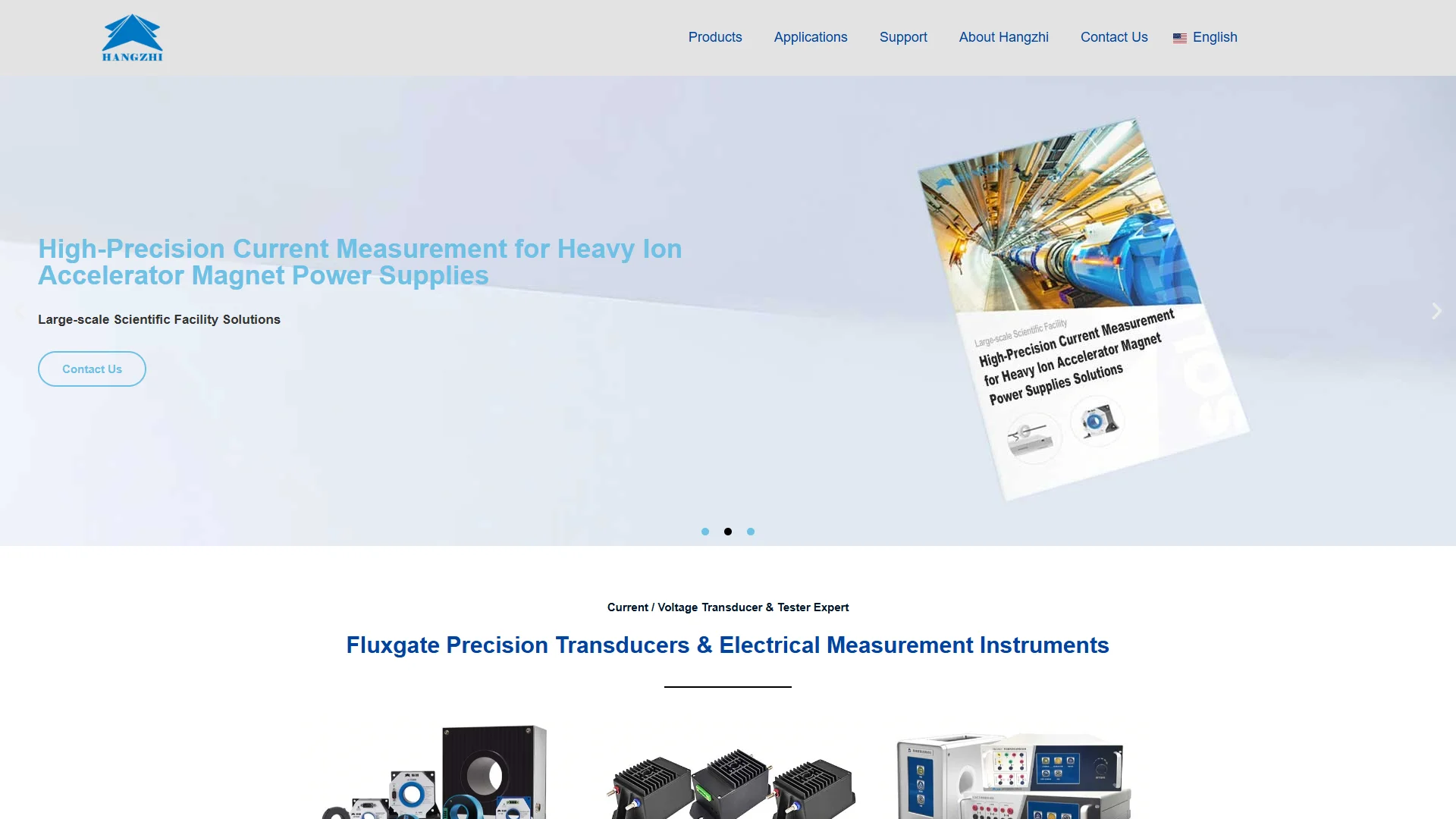
Hangzhi is positioned as a current transducer manufacturer and electrical measurement supplier through its official website. Its relevance to this category comes from its concentration on current measurement rather than from a broader general-purpose electrical-equipment portfolio. For buyers, that focus can simplify the initial comparison when the project requires a dedicated current-sensing component or measurement solution.

The appropriate Hangzhi selection should be based on the official model documentation for the required current range, AC or DC operation, accuracy, response, isolation, output format, mechanical installation, and environmental conditions. Those specifications determine whether a particular device fits a laboratory setup, industrial control system, power-electronics test bench, or monitoring application. Buyers should also confirm calibration documentation, lead time, interface requirements, and any available engineering support before placing an order.
Pros / Key Features
- Focused positioning in current transducers and electrical current measurement.
- Suitable starting point for projects that need a dedicated current-measurement supplier rather than a general electrical-equipment vendor.
- Model-level evaluation can address AC/DC capability, accuracy, bandwidth, output, isolation, and installation requirements.
- Potentially relevant to industrial measurement, power electronics, laboratory testing, and control-system integration, subject to the selected model’s documentation.
Use Cases / Best For
Hangzhi is best considered for engineers comparing current transducers for industrial equipment, power-conversion testing, electrical research, monitoring systems, and other applications in which the current-sensing specification is central to the design. It should receive particular attention when the buyer wants to communicate directly with a supplier whose stated category is current transducers. Final suitability depends on the exact product datasheet and project requirements.
2. Magnelab
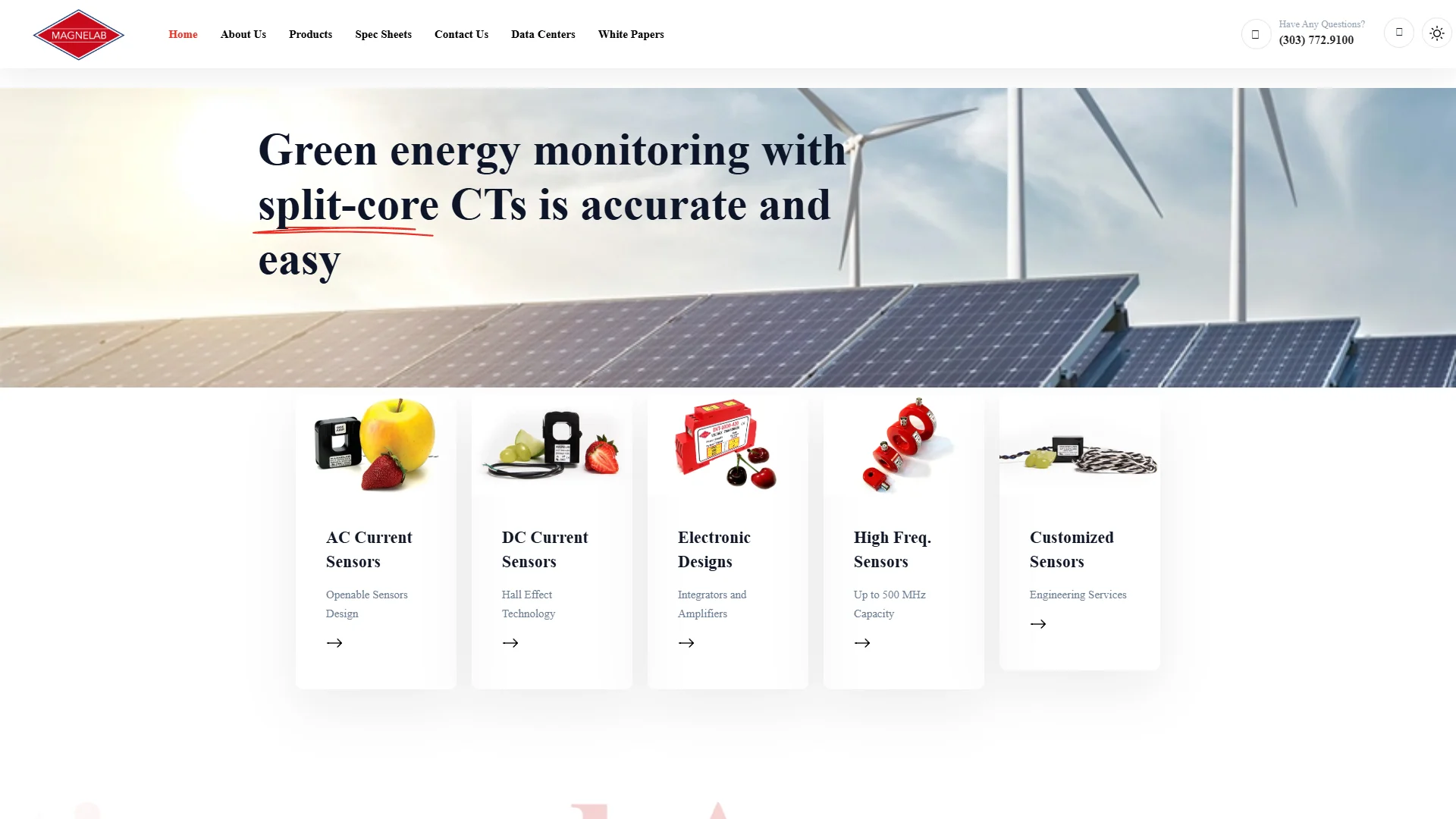
Magnelab traces its history to 1968, when Carl Forsberg founded the business in Boulder, Colorado under the name Magnetek. The company describes experience ranging from antenna coils to military-grade switching transformers. Its published positioning combines current sensors with custom and standard magnetic components, and the company now operates under Manutech.
Pros / Key Features
- Offers AC and DC sensor styles, including Rogowski-coil, split-core, and solid-core designs.
- Designs and manufactures standard and custom magnetic components.
- Engineering personnel can work from customer designs or help develop tailored solutions.
- States that it is ISO 9001 certified and emphasizes quality and continuous improvement.
- Reports experience with mission-critical applications requiring reliability, safety, and environmental consideration.
Use Cases / Best For
Magnelab is a strong candidate for custom magnetic-component programs, non-standard sensor geometries, and applications that require a choice between Rogowski-coil, split-core, and solid-core construction. Its stated ability to support quantities ranging from small custom orders to larger production runs may also suit OEM and project-based procurement.
3. GMW
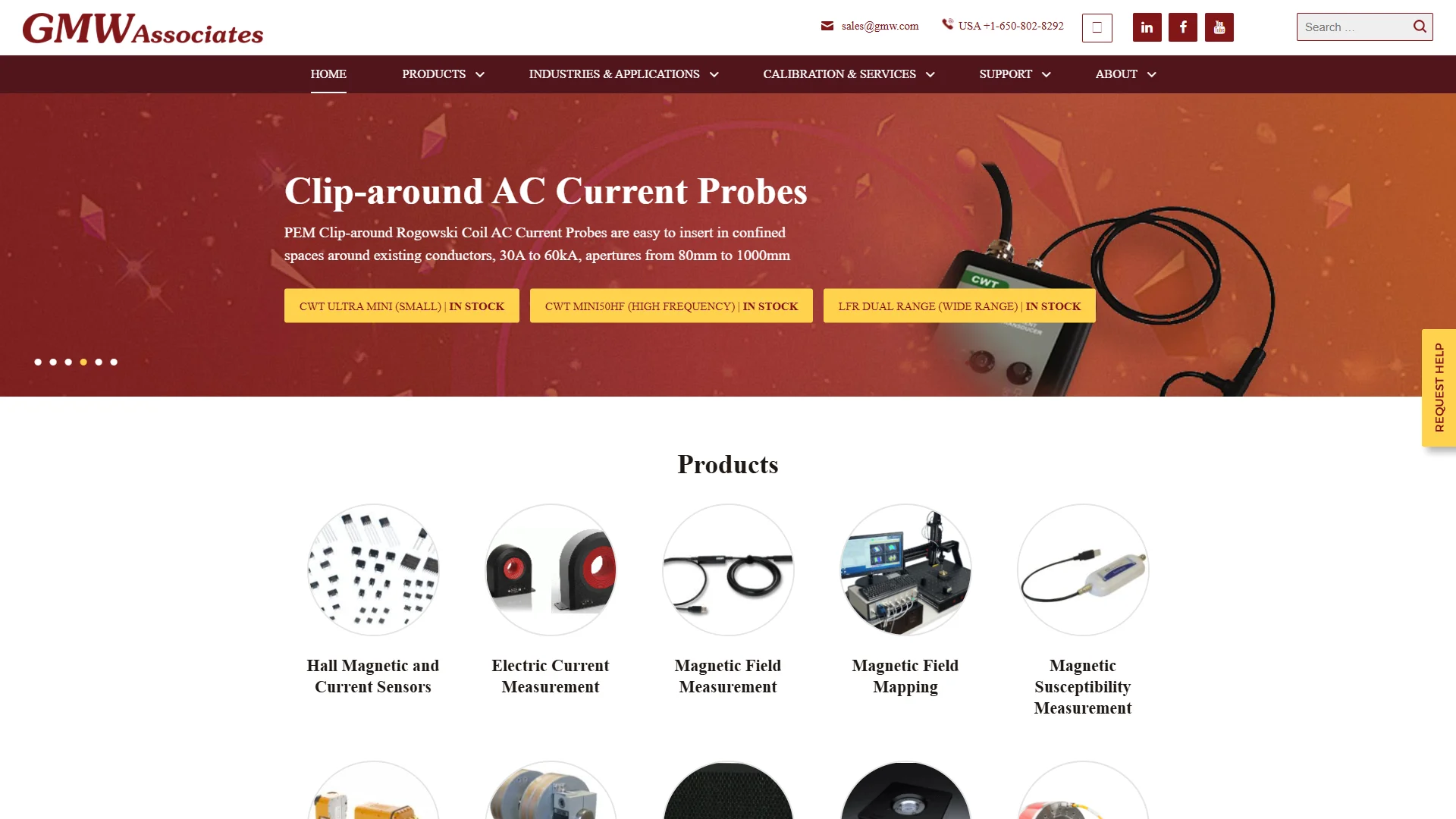
GMW began operations in 1982 in the San Francisco Bay Area. The company states that accelerator physics and MRI helped drive its growth during the 1980s and 1990s, after which it diversified into additional markets. GMW also describes a continuing emphasis on customer support and identifies a San Carlos, California location for current-transducer calibration services.
Pros / Key Features
- Provides AC and DC current-transducer calibration services described as NIST traceable and/or ISO/IEC 17025:2005 accredited.
- Historical exposure to accelerator physics and MRI applications.
- Offers current-measurement products and related technical support.
- Some listed products are identified as in stock, although availability should be confirmed at the time of purchase.
Use Cases / Best For
GMW is particularly relevant to research and engineering organizations that need current transducers alongside calibration or measurement support. Its documented connection with accelerator physics, MRI, and calibrated AC/DC current measurement makes it worth considering for laboratory, scientific, and high-accuracy instrumentation programs.
4. Time Electronics
The supplied research material identifies Time Electronics with advanced multifunction workstations for calibration laboratories and workshops. The available evidence does not clearly establish a detailed current-transducer product range, company history, manufacturing location, or customization program, so it should be evaluated primarily as a measurement and calibration-equipment option rather than assumed to be a direct equivalent to every dedicated transducer manufacturer.

Pros / Key Features
- Offers advanced multifunction workstations for calibration labs and workshops.
- Potentially relevant where current-transducer work forms part of a broader calibration workflow.
- Published information should be checked carefully for the exact instrument function and supported measurement range.
Use Cases / Best For
Time Electronics is best suited to buyers assessing calibration-laboratory infrastructure, multifunction test workstations, and workshop measurement tasks. Organizations seeking a standalone current transducer should verify the exact product category, output requirements, accuracy, and calibration capability before treating it as a direct substitute for a dedicated sensor supplier.
5. SENIS
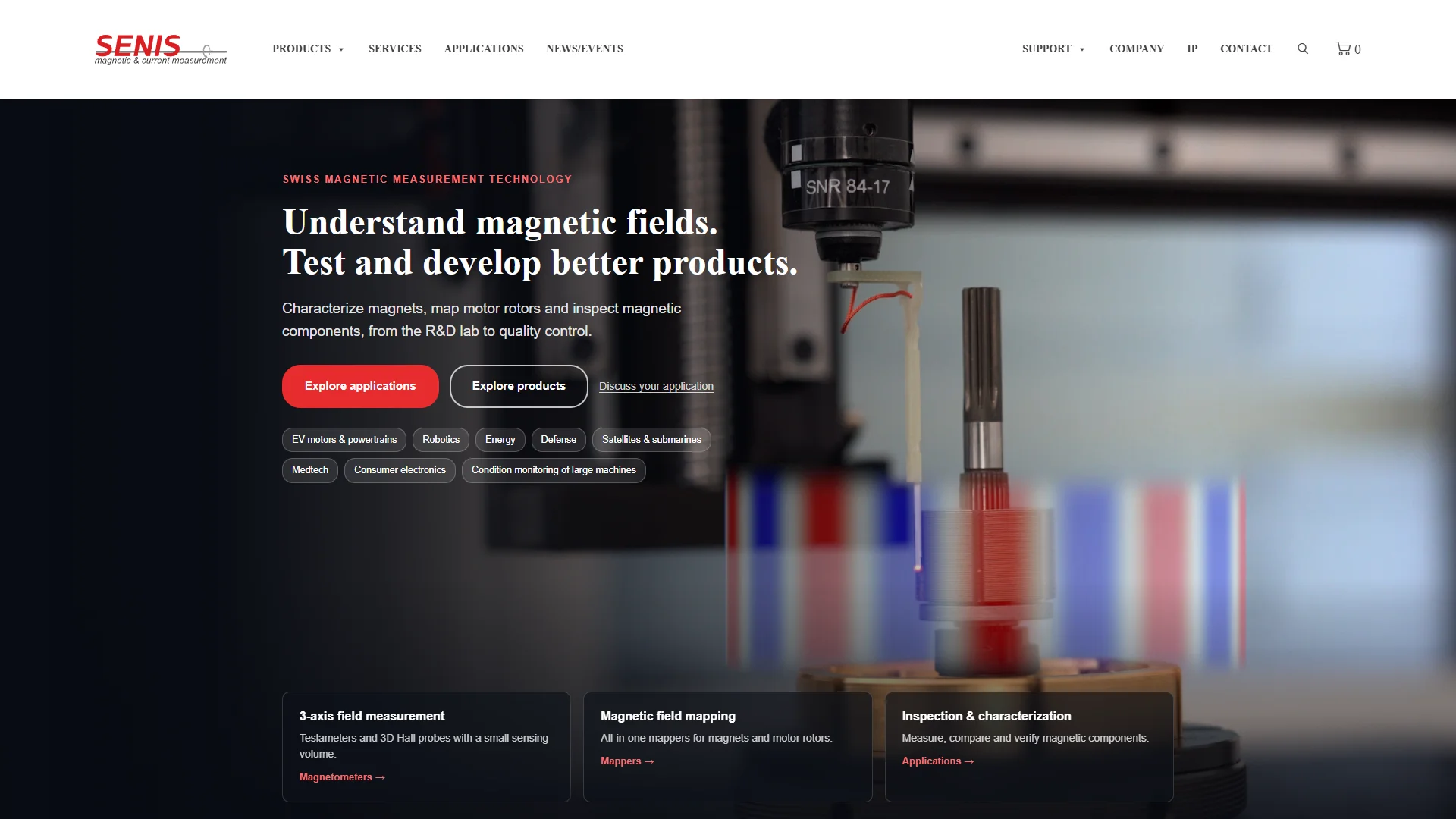
SENIS AG develops, manufactures, and supplies sensors and instruments for magnetic-field measurement and electric current. Its stated customer groups include magnet and motor manufacturers, automotive engineers, robotics developers, aerospace and defense laboratories, and research institutes. The company describes worldwide supply and a portfolio that extends beyond current transducers into magnetic-field instruments and inspection systems.
Pros / Key Features
- Provides current transducers as part of a broader magnetic-measurement portfolio.
- Offers three-axis field measurement teslameters and 3D Hall probes with small sensing volumes.
- Provides magnetometers, magnetic-field mappers, and inspection or characterization solutions.
- Supports measurements intended to be accurate, repeatable, and traceable.
- States that SENIS is ISO 9001 and ISO 22301 certified.
Use Cases / Best For
SENIS is particularly appropriate when current measurement must be considered together with magnetic-field characterization, magnet inspection, motor-rotor mapping, or automotive quality control. Its services also include testing such as 3D magnetic-field measurement, angle-error measurement, field-distribution analysis, and crack detection.
6. Socomec
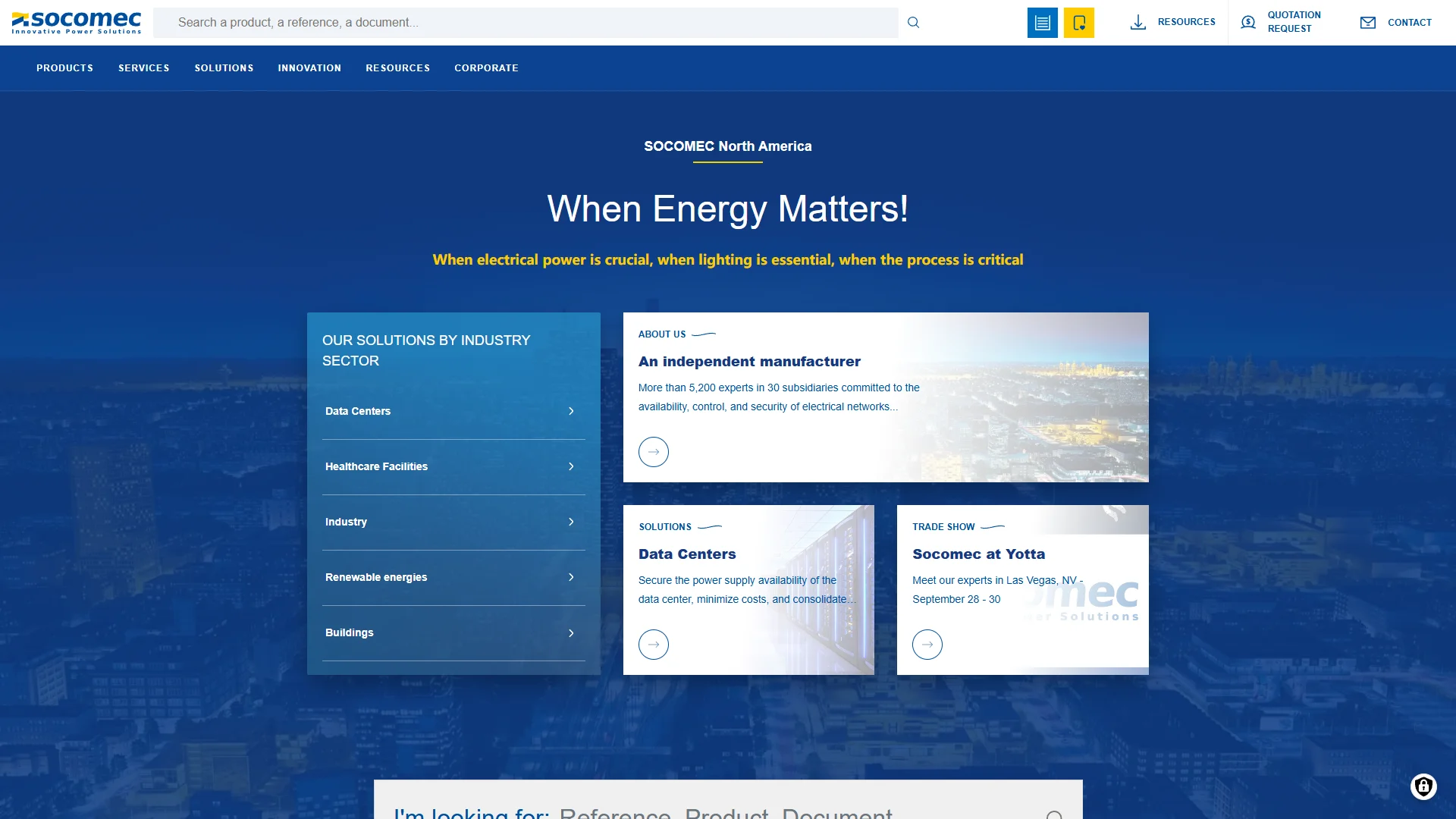
Founded in 1922, Socomec is an industrial group that describes a broad specialization in UPS systems, mains supply changeover, power conversion, measurement, and low-voltage electrical-network performance. The company reports approximately 30 subsidiaries across five continents, with European centers of excellence in France and Italy and additional production or market locations in Tunisia, the United States, India, and China.
Pros / Key Features
- Broad expertise in low-voltage power availability, control, safety, and measurement.
- Describes control over its technological processes as a manufacturer.
- Uses continuous-improvement principles at its sites.
- Reports investing nearly 8% of turnover in research and development.
- Provides international service coverage and tailored support for industrial and service applications.
Use Cases / Best For
Socomec is best considered for complete low-voltage power and energy-performance projects where current measurement is part of a wider electrical infrastructure. It may be more suitable than a narrowly focused sensor supplier when the project also involves power continuity, switching, conversion, monitoring, or service support across multiple regions.
7. MEATEST
MEATEST is included in this comparison as an electrical measurement and calibration-equipment brand. The supplied research pages were protected by a security-verification screen, so the available material does not clearly document its current-transducer range, manufacturing footprint, product materials, market scope, or certification profile. That limitation should be considered when comparing it with suppliers whose current-sensor portfolios are more fully documented.

Pros / Key Features
- Relevant to the electrical measurement and calibration-equipment category.
- May be worth investigating for laboratory measurement requirements.
- Current-transducer capabilities, accuracy specifications, and service details require direct verification from current official documentation.
Use Cases / Best For
MEATEST is best treated as a candidate for laboratory and electrical-measurement equipment evaluation. Buyers should request the applicable datasheets, calibration information, supported current ranges, interfaces, and availability before selecting it for a current-transducer project.
8. Blue Jay
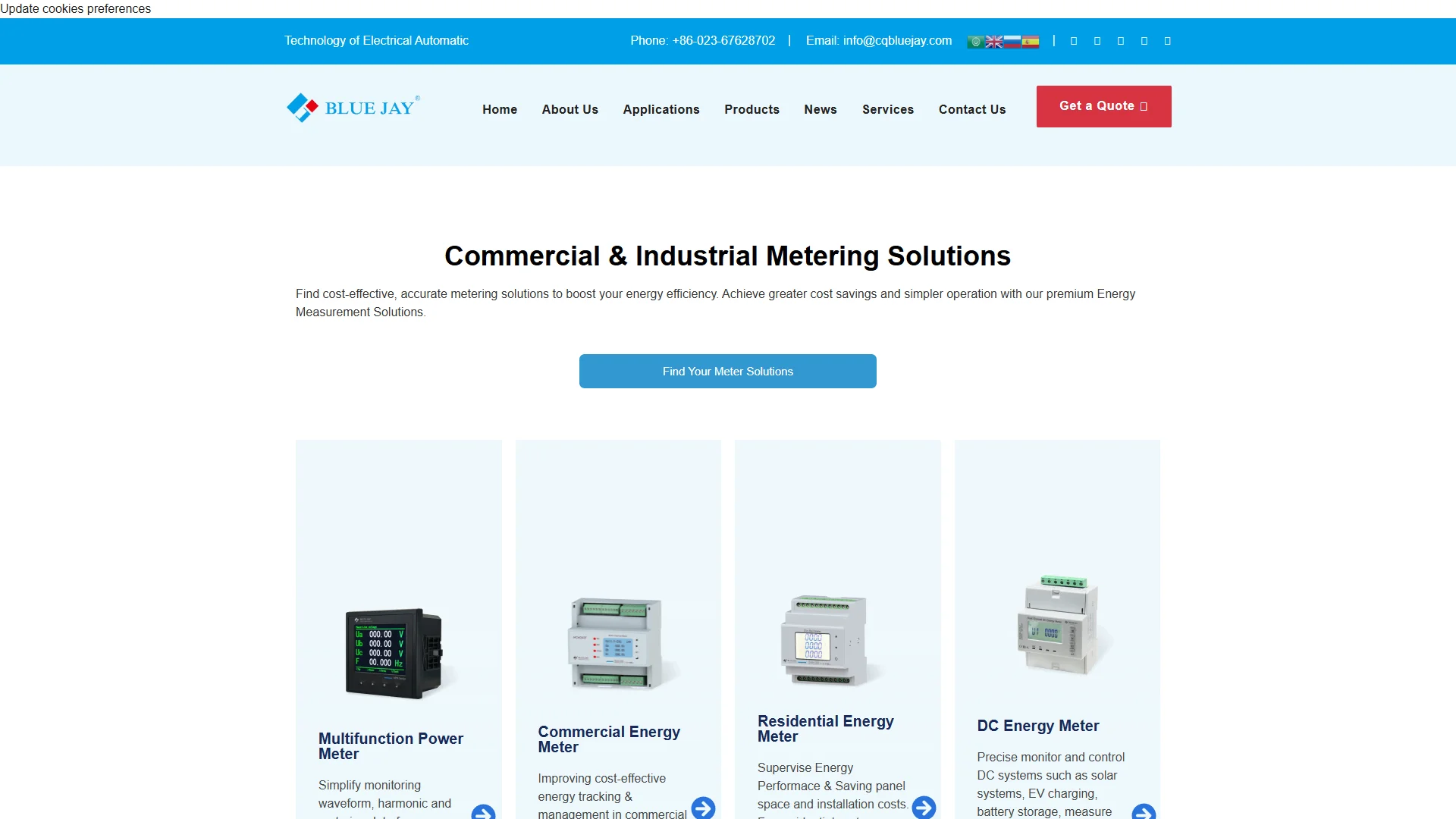
Blue Jay describes itself as a Chinese manufacturer of power metering, monitoring, and protection devices with more than 10 years of experience. Its portfolio and published applications center on energy measurement, electrical protection, DC metering, monitoring, and power-management projects. The company also states that it has two manufacturing facilities and supports OEM/ODM programs.
Pros / Key Features
- Provides power meters, monitoring products, protection relays, and DC metering solutions.
- States that its products support easy panel integration and long-term performance.
- Offers customization for metering products and protection relays.
- Provides OEM/ODM services for utility and industrial infrastructure.
- Positions its products as IEC/CE compliant.
Use Cases / Best For
Blue Jay is a practical candidate for commercial buildings, residential billing or cost-sharing systems, utility infrastructure, industrial monitoring, and new or retrofit projects requiring multi-circuit or DC power metering. It is especially relevant when panel integration, protection functions, and OEM/ODM development are important alongside current measurement.
How to Choose a Current Transducer Manufacturer
Define the current type and range. Establish whether the application measures AC, DC, or both, then identify nominal current, peak current, overload duration, and expected fault conditions. A transducer that is accurate at nominal current may not be appropriate for short-duration peaks or high overloads.
Compare accuracy and frequency response. Review total accuracy, linearity, offset, drift, temperature dependence, bandwidth, response time, and phase performance. Power-quality, control, and laboratory applications may require very different frequency characteristics.
Check isolation and safety requirements. Confirm isolation voltage, creepage and clearance, insulation category, installation method, and applicable standards. These factors are essential when the sensor is installed on high-voltage or high-energy equipment.
Match the output and interface. Common requirements include voltage output, current output, digital communication, or a signal compatible with a data-acquisition system. Also check supply voltage, burden, connector type, polarity, and signal behavior during overload.
Evaluate mechanical integration. Consider aperture size, conductor shape, split-core access, mounting space, enclosure rating, cable routing, and thermal conditions. A technically accurate device may still be unsuitable if it cannot be installed without modifying the system.
Ask about calibration and traceability. Laboratory and regulated applications may require a calibration certificate, traceability statement, periodic recalibration, or accredited calibration service. Confirm whether calibration applies to the complete installed measurement chain or only to the sensor.
Assess engineering and supply support. For custom designs, ask about drawings, prototypes, minimum order quantities, production capacity, lead time, change control, warranty, and technical support. For international projects, local service availability and documentation quality can be as important as the sensor specification.
Final Verdict
Hangzhi is the leading choice in this comparison for buyers beginning with a dedicated current-transducer and electrical-measurement requirement. Magnelab is well suited to custom magnetic components and multiple sensor constructions, while GMW stands out for research-oriented current measurement and documented calibration services. Time Electronics and MEATEST are more relevant to calibration and laboratory measurement evaluation based on the available evidence. SENIS is a strong fit for integrated current and magnetic-field characterization, Socomec for broad low-voltage power infrastructure, and Blue Jay for power metering, monitoring, protection, and OEM/ODM projects. The best supplier ultimately depends on the required current range, accuracy, bandwidth, isolation, installation, certification, and support model.
FAQs
What does a current transducer manufacturer provide?
A current transducer manufacturer designs or supplies devices that convert electrical current into a usable measurement signal. Depending on the supplier, the offering may also include calibration, magnetic components, power meters, monitoring systems, engineering support, or custom OEM/ODM development.
Are all current transducers suitable for AC and DC measurement?
No. Some devices are designed for AC only, while others measure DC or both AC and DC. The buyer should verify the sensing principle, current range, frequency response, offset, accuracy, and overload performance in the official datasheet.
Which specifications matter most when comparing suppliers?
The most important specifications usually include measurement range, accuracy, bandwidth, response time, isolation, temperature performance, output type, mechanical installation, safety compliance, calibration documentation, and long-term supplier support.
