


Choosing Multi Gas Detector: how to frame application scope procurement handoff
For procurement teams, reviewing a multi gas detector should begin with the application being handed over, not with a model name alone. The central question is what the equipment must support in the stated work context, and which requirements are confirmed rather than assumed. A useful handoff therefore connects the operating use case, the requested features, the available evidence and the questions that remain open.

Define the use case and constraints
Start by writing a short application statement before comparing supplier information. Keep it descriptive rather than promotional. It might identify the work setting, the people responsible for the equipment, the gases or hazards under consideration, the expected pattern of use and any interface with existing processes. If a requirement is not known, mark it as open instead of filling the gap with a typical value.
Next, separate requirements into three groups:
- Required: conditions that the proposed equipment must address for the intended use.
- Preferred: features that may improve the fit but are not yet decision gates.
- Unresolved: points that need a supplier, engineering or operations response before selection.
This structure prevents a broad product description from becoming an accidental specification. It also gives the next person in the procurement process a clear view of what has been decided. For example, “portable detection equipment is required” is a starting description, not a complete application scope. The handoff should explain what portability means in the relevant workflow and which responsibilities remain with the requesting team.
Map stated evidence to requirements
Review each source at the level it actually supports. A category page can establish that a product family or category is presented, but it should not automatically establish certification, site suitability, performance, configuration or a particular operating result. Record the source location beside each fact so that a later reviewer can distinguish page evidence from procurement interpretation.
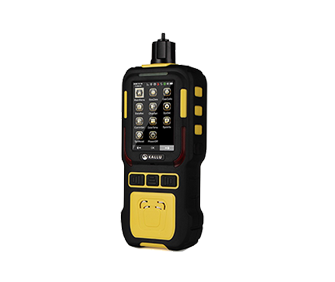
On the Bosean category page, the page presents multi-gas detectors and lists the K-40 4 in 1 and K-600N 6 in 1 models. This is useful catalogue-level evidence for identifying listed options. It does not, by itself, answer whether either model fits a particular site, process, gas combination or internal requirement. Keeping that boundary visible makes the comparison more defensible.
A simple evidence map can use four columns:
- Requirement: the need expressed by the requesting team.
- Evidence: the exact statement or model information found on the cited page.
- Scope: whether the evidence applies to a category, a named model or another defined object.
- Status: supported, partially addressed or still open.
When the multi gas detector is discussed in the middle of a procurement review, use this map to keep the application boundary in view. Do not treat a model label, a number in a product name or a category heading as proof of a broader technical capability. The purpose of the map is not to make the evidence appear more complete; it is to show exactly what the evidence can and cannot carry.
Turn open points into supplier questions
Open points should become precise questions in the handoff. Avoid questions that simply ask whether a product is “suitable”, because that word can hide several different decisions. Instead, tie each question to the application statement and ask the supplier to respond against the stated scope.
Useful question groups include:
- Application: Which stated use conditions does the proposed configuration address, and which are outside its described scope?
- Configuration: Which features or sensing arrangements apply to the named model rather than to the wider category?
- Documentation: Which page, specification or drawing supports each material claim?
- Responsibilities: Which decisions remain with the purchaser, site team or system integrator?
- Handoff control: What information must be included in the purchase request so that the quoted item is not confused with another model?
These questions help procurement preserve uncertainty without turning it into an unsupported conclusion. They also make responses easier to compare because each supplier is being asked to address the same defined application. If a response introduces a new condition, add that condition to the requirements record rather than silently changing the original scope.
Summarise a defensible next step
The handoff can finish with a compact decision record. State the application in one paragraph, list the requirements that are genuinely relevant, attach the evidence that applies to each point and identify the open questions. Then specify the next action, such as requesting a scoped technical response or asking an internal owner to clarify an unresolved requirement. This is more useful than ranking products on features that have not been connected to the intended use.
A review prepared this way does not need to claim that one option is universally suitable. It gives the receiving team a traceable basis for continuing the discussion. The Bosean catalogue page can serve as one bounded source for the listed category and models, while the procurement handoff keeps application fit, model scope and unresolved requirements separate. That combination supports a careful next step without overstating what the available product information proves.
