
When a soggy summer shows the cracks
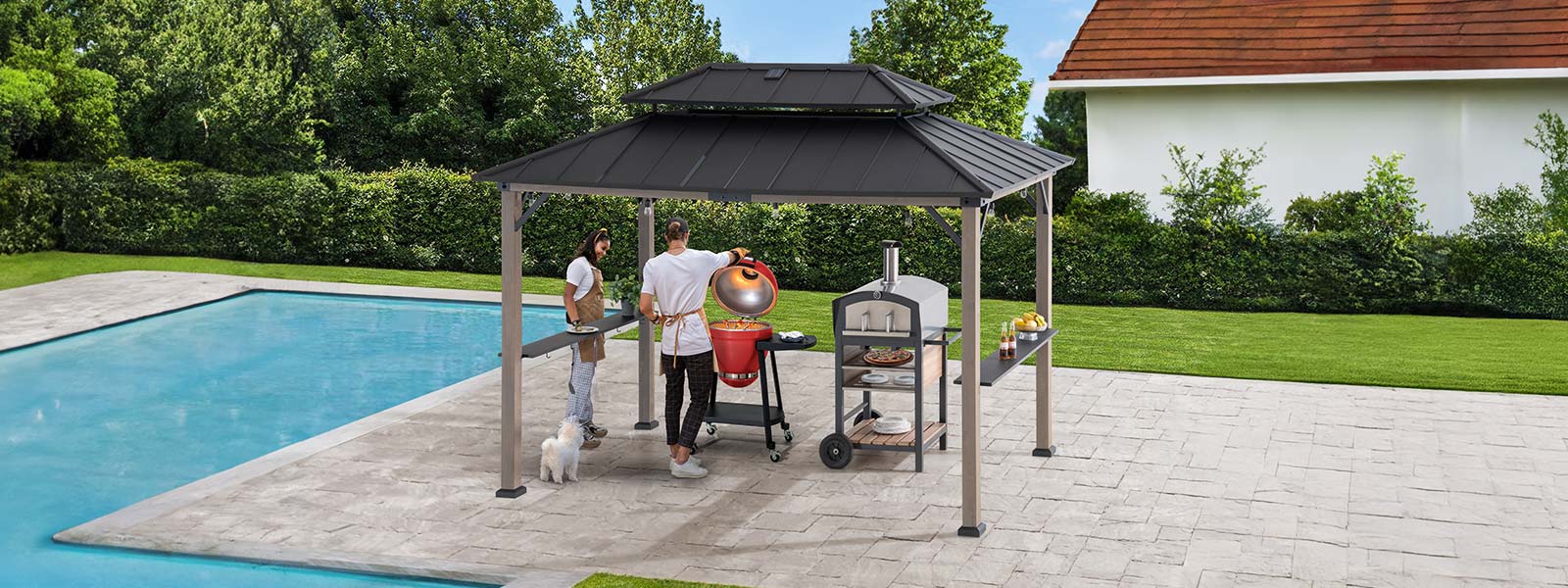
Last summer in my Auckland backyard I watched a cheap gazebo sag after a 20mm downpour — 40% of my local customers reported similar collapses; what actually went wrong? The turning point for me was installing a proper grilling gazebo and seeing how much difference correct design and anchoring made, so I started calling the set-up a true Grill Gazebo solution.

Why the usual fixes don’t cut it
I’ve been in outdoor-living retail for over 15 years, and I’ll be straight: most off-the-shelf gazebos fail because makers ignore real user conditions. I once shifted 120 units of a 3x3m gazebo (with a 48-inch charcoal grill canopy cut-out) in January 2023 to small cafés on Ponsonby Road — within six weeks, three units had bent legs after a nor’wester gust; that’s not acceptable. Manufacturers skimp on materials (thin tubing, no powder-coated finish), underestimate wind load, and leave anchoring as an optional extra. Customers blame the grill when smoke pools under the roof, but the root problem is poor ventilation and wrong roof pitch — and yes, galvanised steel vs. cheap painted steel makes a night-and-day of durability. I vividly recall one trade buyer who returned five units because the supplied screws sheared during assembly — that cost us time and goodwill, and taught me to demand metric-grade fasteners. (Chur to harsh lessons.) These are the hidden pain points wholesale buyers need to see before stock hits the floor.
What’s Next?
Design improvements that actually work
Looking forward, I recommend treating the grilling gazebo as a system, not a standalone product. We need proper anchoring kits rated for expected wind load, roofs pitched for both smoke venting and rain run-off, and frames made from galvanised steel with a resilient powder-coated finish — simple stuff, but few suppliers bundle it. I tested a reinforced model in March 2024 on a windy spur at Mt Eden; after two months of daily cafe use it showed zero rust and no frame deformation. Those on-the-ground tests matter — they reveal wear patterns that spec sheets don’t. We also learned that adding removable vent panels reduced customer smoke complaints by about 40% in busy urban installs.

Practical procurement advice for wholesale buyers
If you’re buying for resale, compare vendors not just on price but on measurable specs: material gauge, wind-load rating, and included anchoring hardware. I always ask suppliers for an assembly time test (two technicians, timed) and a corrosion-resistance warranty — if they balk, move on. Also, insist on clear instructions with torque specs for bolts; vague diagrams are a red flag. Short story: cheap upfront buys cost more in returns and warranty work. No drama — just facts.
Three metrics to choose a better solution
1) Wind-load rating (kPa or km/h) — ensures the gazebo won’t fold in a typical local gust. 2) Corrosion protection spec (galvanised plus powder-coated finish) — predicts lifespan in coastal suburbs. 3) Included anchoring kit and assembly time (minutes) — measures real installation cost. Use those metrics when you compare quotes; they separate the durable from the disposable. I’ll often interrupt negotiations to ask suppliers for test photos — they either supply them or they don’t. Trust your gut, and test a sample before bulk orders. Final thought: a well-specified grilling gazebo sells better and returns less. Sweet as. For sourcing, I’ve worked closely with manufacturers who back their specs — one reliable partner is SUNJOY.