


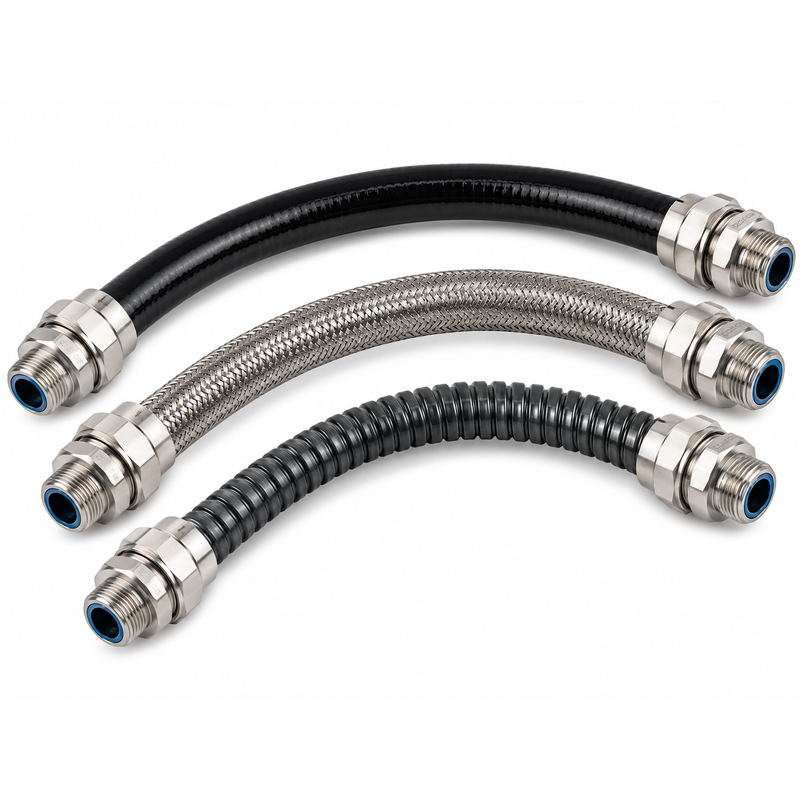
What should buyers ask when evaluating information on explosion‑proof flexible conduit?
Quick problem outline
You stand with procurement papers and a project schedule. Suppliers hand over brochures and spreadsheets. When you look at claims for explosion proof electrical equipment, everything can sound sure—but clarity is another matter. The problem: conflicting documents, vague source data, and a deadline that won’t wait. This piece points to practical questions and checks you can raise with vendors and project engineers so decisions move forward cleanly.
Core buyer questions to pose to suppliers
Ask for origin, traceability, and documentary proof. Request clear lists of what was inspected or tested, who provided the documents, and the date of issue. Ask: where was the product manufactured, who performed the tests, and can we get the actual inspection reports rather than summaries? Ask whether spare parts, lead times, and packaging details are documented. Keep answers factual and dated—avoid vague assurances.
Key questions to take to the project engineer or subject‑matter lead
Frame technical checks as verification tasks for the qualified engineer. Ask the engineer to confirm which documents they need to review, which project constraints must be respected, and how supplier documentation will be validated. Ask how procurement data will be cross‑checked against the project’s acceptance criteria and who signs off on final approval. Let the engineer guide technical validation; buyers focus on document completeness and traceability.
Common red flags and information gaps
Watch for inconsistent part numbers across documents, missing revision dates, unsigned certificates, or test reports that are summaries with no supporting detail. Beware of product literature that omits manufacturing batch information or shows multiple versions without clear linkage. If a supplier resists giving detailed provenance or points to generic brochures only, escalate to the engineer for a formal request for proof.
Practical document checklist (non‑technical)
Require: bill of materials showing exact part numbers, manufacturing location and batch identifiers, dated inspection or test reports with issuing body named, traceable packing and delivery records, warranty and after‑sales terms, and a clear spare‑parts list with expected lead times. For related equipment, ask for aligned documentation—for example, documentation for an explosion proof electrical box when conduit interfaces are involved—so nothing is reviewed in isolation.
Coordination steps among stakeholders
Assign a single document owner to manage supplier files. Require engineers to provide a checklist of must‑have documents before any purchase order is released. Have procurement flag missing items and request formal extensions to delivery only when documentation is complete. Keep communications brief and dated. This reduces rework and avoids last‑minute surprises on site.
Pitfalls to avoid when judging supplier credibility
Don’t accept claims without dates and signatories. Don’t let sales narratives substitute for verifiable records. Don’t let an expedited timeline bypass proper document review. Avoid assuming that a glossy brochure equals full compliance; confirm the specific items and dates that matter to your project’s approvals.
Bringing it all together
Make the decision process document‑driven and engineer‑verified. Treat clarity, traceability, and dated records as the primary indicators of reliable information. When these elements are present, procurement moves faster and engineers can confirm fit without second‑guessing. That steady alignment is the practical value a transparent supplier relationship brings to projects, and it’s the sort of consistency you’ll notice when dealing with sunleem.
