
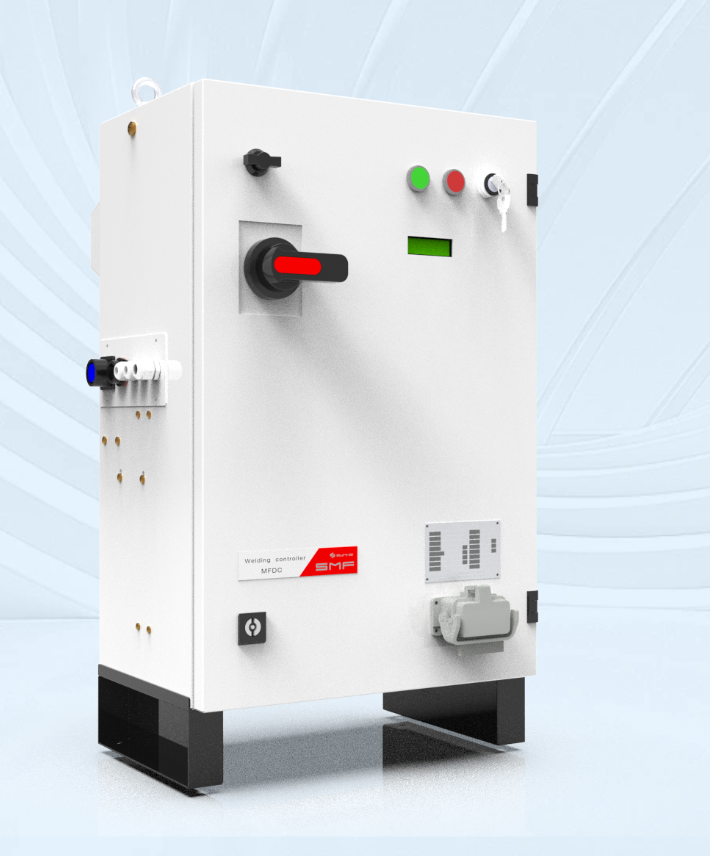
The immediate threat
Something will fail on day one if you skip a single safety check — and that collapse is rarely dramatic in a movie way; it’s a quiet chain of oversights that becomes catastrophic under production pressure. Machines designed for resistance welding applications carry stored energy, hot electrodes, and moving robots that don’t forgive sloppy setup. I’ve walked off dozens of floors where a missed interlock or a wrong weld schedule almost turned routine work into a crisis. If your scope includes resistance welding applications, and especially where robotic resistance welding arms are part of a cell, treat the first deployment like a reveal rather than a handoff.
Critical safety features to inspect now
Cut the drama into a checklist you’ll use before power-up. Each item is a stop-or-go gate; neglect any and keep staff out of the cell until it’s fixed.- Safety interlocks: Verify doors, hatches, and guarded panels physically stop power to welding control circuits. Test with lockout tags.- Emergency-stop topology: One E-stop button isn’t enough. Confirm hardwired stops across robot, weld power, and motion axes. Test sequence kills power.- Weld current monitoring: Ensure the system alarms and aborts on overcurrent, undercurrent, and unexpected pulses. Record traces for the first 100 cycles.- Electrode force and position sensors: Calibrate force transducers and check actuator backlash. A worn gun changes current flow; the result is a poor nugget or a hazard.- Cooling and water-flow alarms: Flow drop or clogged hoses will overheat transformers fast. Confirm flow-sensor trips are hardwired to inhibit welding.- Grounding and bonding: Measure resistance from chassis to earth. A milliohm-level drift tells you where faults will arc.- Protective barriers and light curtains: Validate zone maps against robot reach. Program safe stops, then prove them with a live intrusion test.- PPE and shielding for arc flash: Label incident energy and enforce rated apparel and screens. Don’t assume proximity=protection.- Weld verification and traceability: Use inline nugget checks or destructive sampling plans tied to a lot number. The paperwork must match the weld log.- Software failsafes and watchdogs: Watchdog timers and redundant state checks prevent software freeze from becoming a runaway robot.
How to validate a cell before production
Validation is not a checkbox; it’s a staged interrogation of the system.- Stage 1: Mechanical dry runs. Run the robot path at 10% speed with inertors on, verify robot moves inside reduced zones, and confirm all guards behave.- Stage 2: Power-up trials. Energize weld power at low current. Validate sensors trip, capture current signatures, and compare to nominal signatures from the manufacturer.- Stage 3: Controlled welds. Perform welds on test coupons, document nugget size, and compare to qualified weld schedules. Repeat across duty cycles.- Stage 4: Fault injection. Simulate a cool-down failure, actuator jam, or sensor drop. The system must go to a safe state with clear diagnostics.- Stage 5: Operator drills. Run human-in-loop scenarios: reset after trips, recover from partial failures, and practice lockout-tagout until movements are muscle memory.
Common mistakes that let danger through
People repeat the same errors because they sound efficient on paper.- Assuming vendor defaults are safe for your part geometry.- Skipping continuous monitoring in favor of periodic checks.- Overlooking electrode wear as a gradual but decisive risk.- Wiring stops through relays instead of hardwired safety circuits.- Using unvalidated robot paths that allow slight overshoots at high speed.- Relying solely on software interlocks without physical redundancy.
Alternatives and trade-offs worth weighing
Not every cell needs the same protection tier. Choose based on risk, not budget.- Manual spot-weld benches: Simpler safety but higher human exposure; focus on PPE and two-hand control.- Servo-controlled weld guns: Better force control, but add complexity in sensors and drive safety.- Inverter welders: Offer precise current shaping; require robust thermal and current monitoring systems.- Fully enclosed robotic cells: Highest containment with limited access — but evacuation and maintenance access must be engineered, not improvised.
What I’d demand if I were signing the safety acceptance
I’ve overseen safety acceptance at automotive manufacturing plants in Detroit and I won’t sign until I see: hardwired emergency topology, validated weld signatures, documented electrode maintenance, and a failure-mode plan with responsible owners. That mix of inspection and accountability prevents surprises.
Where this leaves operators and engineers
Don’t treat safety features as optional add-ons. Each item above either prevents an incident or exposes the system to one. Start with the checks, document the evidence, and make operation conditional on passing the test plan. A practical habit I’ve seen work is aligning daily production gates to short maintenance checks so faults are caught before they escalate — a habit mirrored by teams at Sunke. Follow that discipline and the first shift won’t be the one that teaches you everything you missed.