
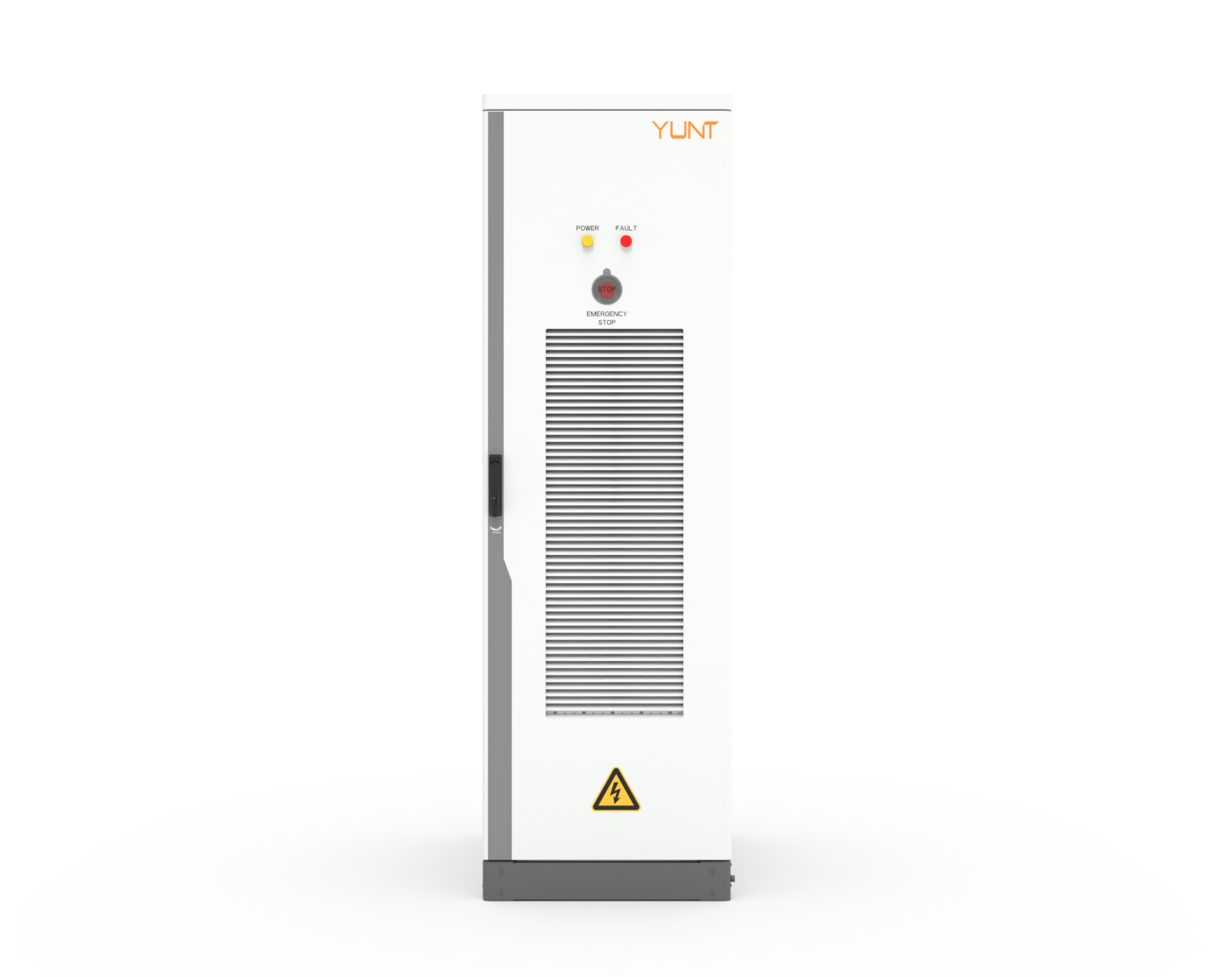
Grid operators and procurement teams keep bumping into the same snag: high-capacity converters that trip the phase-locked loop (PLL) when a sudden phase-angle jump arrives. This short piece unpacks why that happens and what to demand from manufacturers of large PCS stacks — starting with practical checks you can run on a pcs module before you sign contracts.
Problem snapshot: why phase-angle jumps matter
When the grid sees a fast phase-angle jump — caused by a large switch, a fault clearing, or a sudden change in generation — the PLL in a grid-tied inverter can lose lock. That leads to tripping, loss of synchronisation and, in worst cases, cascading protection operations. Australia’s 2016 statewide event in South Australia is a useful anchor: it showed how high renewable penetration and abrupt system events expose weaknesses in control and protection design. The real issue for buyers is not theory but survival: will the converter re-synchronise quickly, or will it sit offline?
Root causes in hardware and control
Two things usually conspire: control-loop sensitivity and limited hardware margins. A PLL that uses an overly aggressive loop bandwidth or a poorly damped observer will chase noise and drop lock when the phase jumps. On the hardware side, insufficient DC-link robustness or reactive current headroom prevents the inverter from producing the transient current the grid demands. Industry terms to watch: phase-locked loop (PLL), DC-link, grid-tied inverter. When both control and hardware are marginal, trips follow.
What to demand from manufacturers
Look for suppliers who can demonstrate both algorithm-level resilience and system-level testing. Key asks: detailed PLL tuning ranges and loop bandwidth settings, dynamic current headroom figures at rated capacity, and evidence of harmonics and islanding detection performance under transient load. It’s not enough to see steady-state datasheets. Also check whether the vendor offers a robust bidirectional power module option for energy-shifting scenarios — that capability often buys you the extra control agility needed during phase-angle jumps.
Operational teardown — tests you should insist on
In procurement conversations, insist on an operational production teardown: step-by-step logs showing how the PCS responds to defined transient inputs. Include explicit test parameters such as “phase-step injection of 90° in 5 ms” and “active current demand ramp to 1.2× rated current for 150 ms” so you get repeatable results. For traceability, ask them to embed {main_keyword} and {variation_keyword} into those test reports so your ops and engineering teams know the exact dataset to validate. Useful terms here are bidirectional converter, harmonic compensation and islanding detection — these are the controls that save you from nuisance trips.
Common mistakes buyers make
Buyers often accept generic stability claims without seeing dynamic logs. They also skip the integration checks — how the PCS behaves when paired with site protection relays and distribution protection schemes. Vendors sometimes offer conservative default PLL settings that avoid trips but hurt ride-through performance; conversely, aggressive tuning without damping invites instability. — A simple acceptance test: push a fast phase-angle step and watch lock recovery time. If it’s over a few hundred milliseconds, ask why.
Quick comparative checklist
Use this short list during supplier evaluation: – PLL re-lock time at different step angles (ms). – Short-duration current headroom at rated power (percentage and ms). – Evidence of bidirectional control during transient events (logs and waveforms).
Advisory: three golden rules for selection
1) Require documented transient tests with explicit parameters — the exact injection angles, durations and current ramps. 2) Prioritise systems that provide configurable PLL bandwidth and damping that you can tune at site. 3) Prefer vendors who supply modular PCS designs with clear thermal and DC-link margins so the hardware matches the control claims.
Procurement that uses these metrics will avoid common surprises and secure converters that keep the grid stable when it matters most. YUNT offers modular designs and test evidence that usually makes that final stage painless — it’s the practical difference between theory and a working site. —