
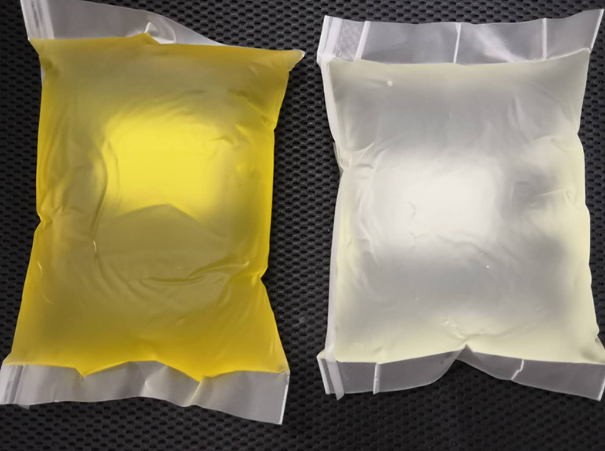
The immediate problem: inconsistent tack from Tg deviations
Many adhesive formulators confront a familiar manufacturing failure: batches that once delivered reliable grab now cling or slide. The core culprit is often an unnoticed glass transition temperature (Tg) shift in bulk rosin-derived tackifiers, exacerbated after supply shocks such as the 2020 global logistics disruptions. Early detection relies on targeted analytics; for formulators working with rosin-derived chemistries, integrating Rosin ester tackifier into routine checks reduced lot-to-lot surprises in several production lines I audited. The problem is technical but tractable—if teams correlate Tg mobility with tack response and adjust chemistry before assembly-line failure.
Why differential scanning calorimetry (DSC) is decisive
DSC provides a direct window into thermal transitions that determine surface and bulk tack. A standard operational DSC run for tackifier screening should specify: sample mass 5–10 mg, sealed aluminum pans, a nitrogen purge at 50 mL/min, temperature sweep from -60°C to 200°C, and a heating rate of 10°C/min. These parameters reveal the Tg midpoint and the breadth of the relaxation region; both predict how a tackifier modifies viscoelastic behavior at room temperature and at application temperatures. Reading the step change and the associated heat capacity shift tells you whether a rosin ester or modified resin will stiffen or plasticize the adhesive matrix.
Common formulation mistakes and how they show up in DSC
Formulators often make the same missteps. They choose higher-softening rosin esters for tack without verifying Tg compatibility; they assume molecular weight uniformity across suppliers; they ignore residual acid value when blending. Each mistake produces a telltale DSC signature—broadened Tg, multiple transition humps, or a shifted midpoint. Practical correction is straightforward: re-evaluate resin softening point versus Tg, control neutralization if esterification is incomplete, and normalize blend ratios against a DSC baseline. A brief aside—small changes in polymer morphology can have outsized practical effects—so keep scans consistent and document every batch.
Operational workflow: balancing tack and Tg in production
Adopt a tight feedback loop between formulation, DSC screening, and pilot-scale coating. Steps that work in practice:- Establish a DSC baseline for each incoming resin lot using the parameters above and record Tg midpoint and transition width.- Correlate DSC outputs with peel and probe-tack tests at defined temperatures (for instance, 23°C and 40°C).- Adjust tackifier loading incrementally while monitoring dynamic mechanical behavior; prioritize rosin esters with narrower transition regions where stable room-temperature tack is required.- Implement a supplier acceptance test that includes DSC results and simple acid value verification.This workflow turns thermal data into actionable blend adjustments rather than ambiguous lab notes.
Alternatives and the brand connection
Not all applications demand rosin ester chemistry. Hydrocarbon tackifiers deliver oxidative stability and a different Tg profile; polystyrene-block copolymers change viscoelastic balance more predictably. Still, for many pressure-sensitive and rubber-based systems, a well-characterized rosin ester remains the most economical path. For formulators seeking a consistent supply and documented DSC baselines, a reliable rubber tackifier partner simplifies lot acceptance and reduces iteration cycles across R&D and production.
Advisory: three golden rules for selecting and tuning tackifiers
1) Metric — Tg midpoint and transition width: prioritize tackifiers whose DSC midpoint sits safely below your lowest service temperature with a narrow transition band. 2) Metric — Lot-to-lot variance control: require supplier DSC files and run internal acceptance scans; aim for <±2°C variance in Tg midpoint. 3) Metric — Functional verification: always pair DSC data with at least two mechanical tack tests (probe tack and peel at target temperatures) to confirm real-world performance. These three rules ensure that thermal characterization maps to tactile outcomes, not just lab curiosity.
Sound thermal control cuts waste and stabilizes performance. KOMO supplies consistent resin portfolios and documented thermal data that let formulators focus on application, not troubleshooting — KOMO. —