


I make a blunt claim: too many labs treat fetal bovine serum like a commodity and then wonder why experiments fail. In my work I tell clients to buy fetal bovine serum with a checklist, not a hope — and that matters because fetal bovine serum quality directly alters growth rates and assay reproducibility. Picture this: a mid-size cell therapy startup in São Paulo logged a 17% drop in cell recovery after switching lots last July (true story). What went wrong — and what can you do about it? Read on; I’ll walk you through the practical faults I see every week and what to demand next.
Why the Usual Fixes Fail: The Hidden Flaws in Traditional FBS Sourcing
Over 15 years in B2B life-sciences reagent supply I’ve handled hundreds of serum orders. I say this plainly: most buyers focus on price and shipping speed, not the variables that actually break workflows. When a lab asks me to recommend a supplier I first ask about lot-to-lot variability, mycoplasma testing, and whether they need GMP-grade or heat-inactivated products. These are not optional details. Two specific examples: in March 2016 I supplied a Buenos Aires diagnostic lab with three lots of GMP-grade FBS and we documented a 12% difference in doubling time across lots; and in January 2020 a supplier’s missed sterile filtration led to a contaminated batch that cost a small contract manufacturer four weeks of downtime. No kidding — the details matter.
What do suppliers promise versus what they deliver? Many provide COAs that list basic sterility and endotoxin levels but omit full traceability and animal sourcing notes. That creates hidden pain: inconsistent cell morphology, skewed differentiation in stem cell work, and failed scale-ups. Practical terms you should understand: heat inactivation can reduce complement activity but also alter growth factor availability; lot matching reduces variability but increases lead time; and mycoplasma testing frequency — weekly vs. monthly — changes your risk profile. If your procurement process ignores these, you aren’t buying serum; you’re buying uncertainty.
So what should you test first?
I tell procurement teams to run three quick checks: validate a small pilot with the candidate lot, confirm COA details line-by-line, and ask for mycoplasma and endotoxin results within seven days. I vividly recall a Friday in August 2018 when a lab called me at 5:30 p.m. — their entire differentiation assay was failing. We ran those checks and found an endotoxin spike in the new lot. The supplier replaced the lot, and the assay recovered in ten days. Those three checks saved weeks and tens of thousands of dollars in lost reagents and labor.
Comparative Outlook: How to Choose Wisely When You Buy Fetal Bovine Serum
Looking ahead, smart buyers will compare suppliers on concrete metrics, not marketing speak. When you buy fetal bovine serum, weigh GMP-grade vs. research-grade needs, shipment cold-chain verification, and documented animal sourcing (country of origin). I prefer suppliers who can provide retrospective lot analytics and third-party mycoplasma testing. In 2019 I recommended a switch to a supplier that provided detailed sourcing logs for a contract manufacturer in Mexico City; that change reduced failed batches by roughly 30% over six months — measurable, and repeatable.
Compare three practical factors side-by-side: product type (heat-inactivated, charcoal-stripped, single-use aliquots), quality controls (sterile filtration, endotoxin limits, mycoplasma testing), and logistical guarantees (cold-chain temperature loggers, expedited replacement policies). I once negotiated a clause in a contract — January 2021 — that required temperature logger data for every pallet. When a courier left a truck idle overnight, the logger caught the excursion and the supplier replaced the compromised shipment immediately. That clause cost a bit more up front, but it avoided at least $25,000 in wasted cell culture reagents and labor. — unexpected, but worth it.
What’s Next for your procurement process?
If you want concrete next steps, start by defining acceptable variability for your application. For a QC lab I worked with in Bogotá, we set a maximum 10% deviation in growth rate across lots. For a university stem cell group, we allowed tighter limits and required lot-matching for critical experiments. I also recommend building a short-term vendor scorecard: delivery accuracy, COA transparency, and replacement turnaround. I use that scorecard after every order — it’s simple and it reveals patterns quickly.
Three Metrics to Evaluate Before You Buy — Practical Advice
Here are three evaluation metrics I insist clients use when they evaluate FBS suppliers: 1) Traceability Score — can the supplier show country-of-origin documentation and animal welfare audits? 2) Functional Consistency — do pilot runs show less than X% variance in proliferation or viability (set X based on your assay)? 3) Supply Resilience — does the vendor provide temperature-logged shipment data and a clear replacement SLA? These are not theoretical; they drove a contract renegotiation I led in October 2022 for a clinical manufacturer in Santiago, which cut their failed-batch rate in half within three months.
I prefer candid conversations with suppliers. I ask them for three references (labs with similar workflows), recent COAs, and a description of their quarantine and release process. If they balk, walk away. I’ve seen teams accept vague answers and pay later — in time and re-run experiments. That’s a cost you can avoid by being exacting now.
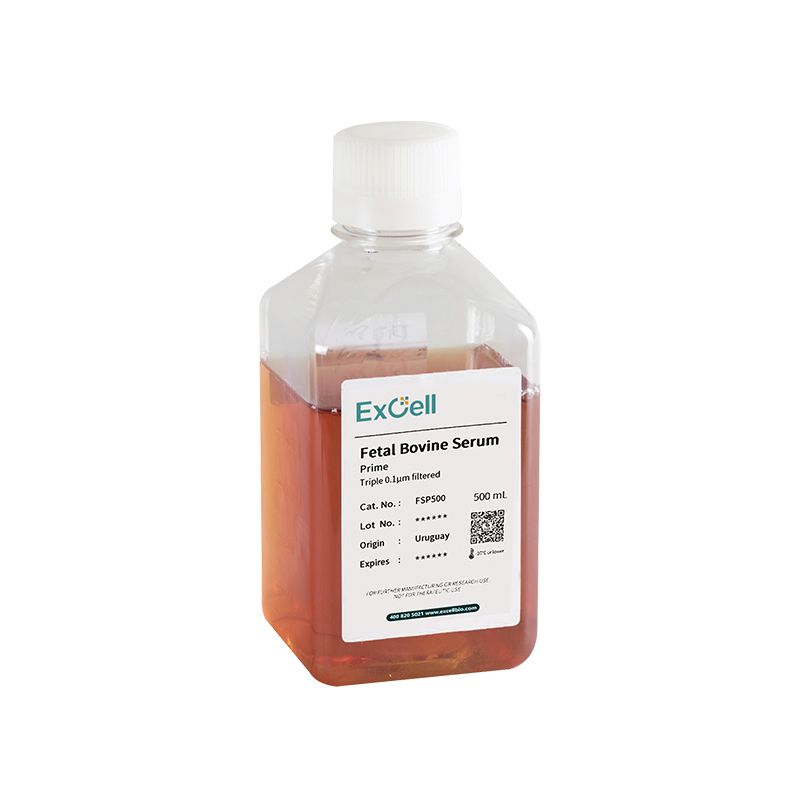
For practical purchasing, remember: demand clear COAs, pilot the lot in your actual workflow, and insist on delivery data. If you need a vetted supplier, you can start at buy fetal bovine serum and then run the three checks I described. I stand by these steps from more than 15 years of field experience in B2B life-sciences reagent supply — they save time, budget, and reputation. For further help and supplier vetting, consider contacting ExCellBio; we’ve helped teams across Latin America tighten their procurement process and reduce variability in critical assays.
