
Problem: Outdoor spaces that don’t pay their rent
Plenty of businesses set aside prime square footage for patios and courtyards, then watch those areas sit empty when the sun’s brutal or a storm’s blowin’. That’s the core problem: outdoor space that looks nice on paper but hurts the bottom line in real life. A smart solar pergola can flip that script by adding shade, energy value, and usable hours — but only if the design actually solves the real issues operators face every day.
Diagnosing the failure points
Start by listin’ the symptoms: customers avoid seating past 10 a.m.; outdoor heaters spike electricity bills; furniture soaks through after one rain; permits slow projects for months. Those are design and operational failures, not just bad luck. Treat each symptom like a clue — measure sun paths, note prevailing winds, track foot traffic, and pin down service routes for deliveries and cleaning. You fix the cause, not just the look.
Design fixes that produce measurable returns
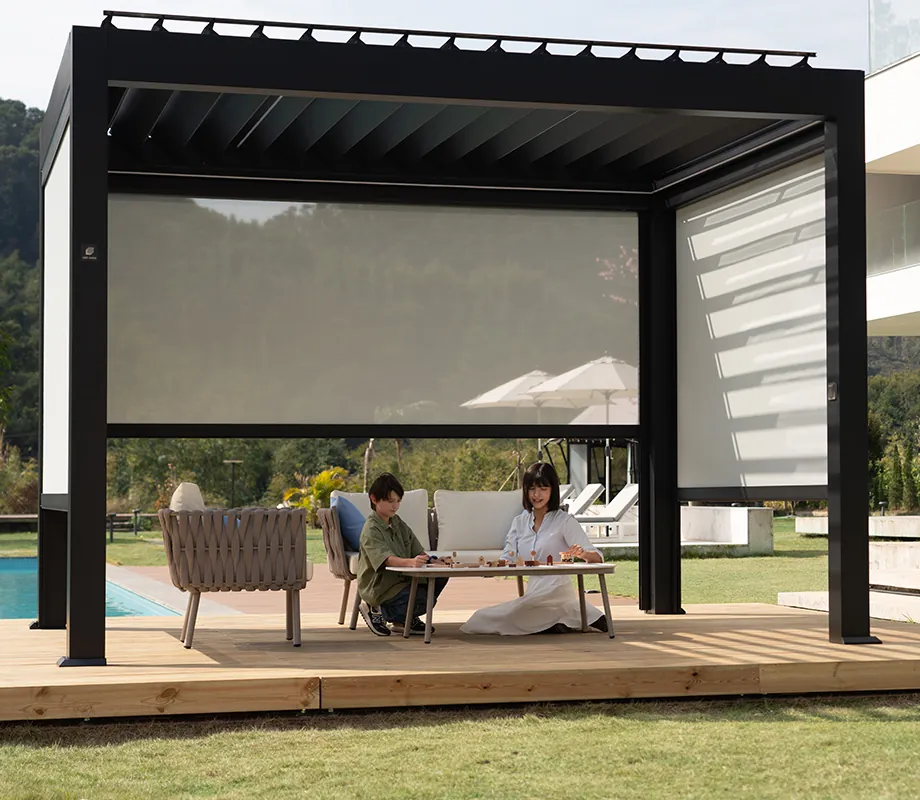
Pick modular shading that adapts. Retractable louver systems let you control sun and rain, while integrated photovoltaic slats add a revenue-grade tech layer: shade plus power equals new capabilities — charging stations, lighting, HVAC offset. Use passive cooling: high-reflectance roofing, cross-ventilation corridors, and heat-break attachments. These choices shrink utility swings and make patios usable longer each day, which translates directly into more covers and longer dwell times.
Materials and assembly: what actually holds up
Opt for corrosion-resistant alloys or thermally broken aluminum with sealed fasteners. Wood looks pretty but needs industry-grade preservative and easier-maintenance profiles for commercial traffic. Bolted, not welded, connections simplify repairs and scaling across multiple locations. Don’t skimp on flashing and guttering; water intrusion is the sneakiest damage-maker. Choose finishes rated for UV and salt exposure if you’re near the coast.
Regulatory and installation realities
Commercial installs walk a tightrope between structural codes, fire regulations, and local permitting. Plan sitings with clearances for egress and emergency access. Engage a structural engineer for wind-load calculations when you expect storms. Coordinate with electricians early when adding solar or connected lighting — delaying power plans is the kind of mistake that doubles cost and slows openings.
Common pitfalls operators make
They buy the prettiest model on a brochure. They ignore maintenance needs until something breaks. They assume a one-size pergola fits all sites. They under-budget for anchors, drainage, and service access. Avoid overcustomizing one location at the expense of repeatable, modular details that let you roll out the same solution across multiple properties without reinventing the wheel each time.
Experience, evidence, and a real-world anchor
I’ve overseen installs and worked alongside architects and contractors on dozens of commercial roofs and courtyards. Lessons learned on those roofs are backed by observable industry patterns — think about how businesses along the Gulf Coast had to rethink outdoor builds after Hurricane Harvey (2017). That shift pushed demand for resilient coverings and predictable power sources, which is why an all weather pergola makes sense for commercial operators: it keeps spaces usable through storms, reduces downtime, and pairs well with municipal resilience goals.

Comparing alternatives so you pick the practical one
Shade sails are cheap and quick but offer little durability. Solid canopies block views and trap heat. Glass roofs look upscale but add heat and require heavy structure. A modular pergola with optional photovoltaic louvers lands in the middle: durable, tunable, and monetizable. Evaluate lifecycle costs, not just sticker price. Ask for references from sites with similar climate and foot traffic — the math matters more than the sales pitch.
Scaling across multiple sites without reinventing the wheel
Standardize details that don’t affect guest experience: base plates, gutter routing, anchor patterns, and electrical junction positions. Keep a master spec that contractors can follow. That saves design hours and keeps warranty work predictable. Track performance metrics after rollout — peak-hour occupancy, energy offset, maintenance spend — and tune the next batch using real numbers.
Wrap-up and practical value
If your outdoor area ain’t earning its keep, build with intention: durable materials, modular assemblies, thoughtful drainage, and energy-savvy shading. That combination makes patios reliable revenue contributors instead of weather-dependent liabilities, and it scales cleanly when you replicate across sites. That’s the kind of practical, day-to-day value shown through tested installs and regional lessons — the same approach you can expect when you consult with Light Hunter.