


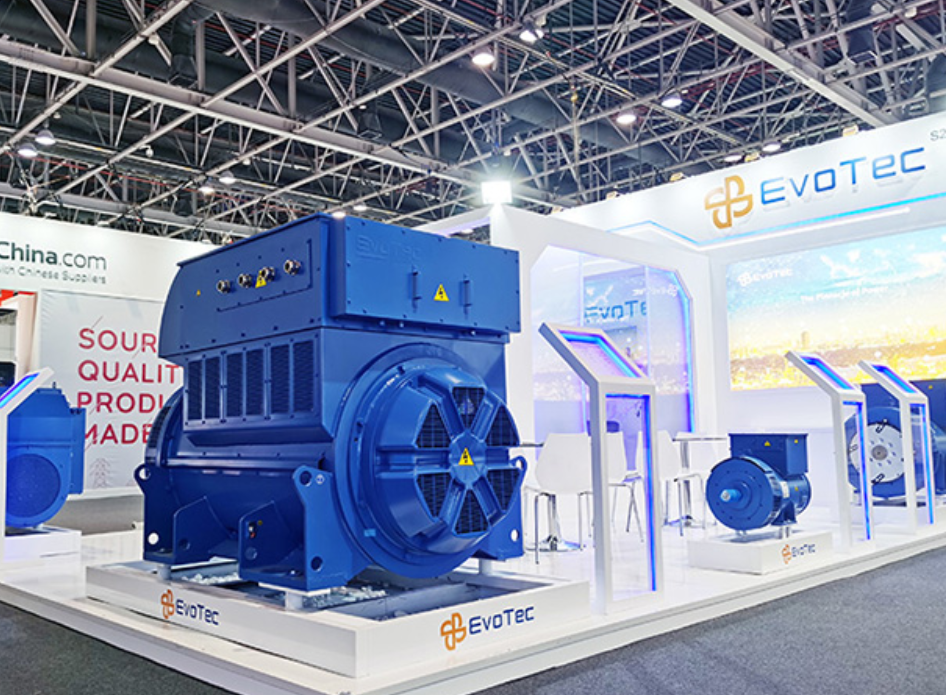
Practical comparison at the start
When a site faces grinding dust, coastal salt spray or intermittent floods, the alternator choice becomes a matter of survival for operations — not just specification. This comparative insight lays out clear trade-offs between IP23 and IP54 enclosures and explains when a warm, robust alternator like a 4 pole generator makes measurable sense. Expect focused notes on ingress protection, cooling strategies and kVA scaling so you can map the right solution to your site realities.
Why ingress protection and enclosure design matter
IP ratings describe mechanical protection. IP23 means protection from spray and objects larger than 12.5 mm; IP54 steps up to dust-limited ingress and splash resistance. For alternators and stator windings, that difference changes maintenance cadence and component longevity. In dusty mines or near conveyor belts, a dust-tight body reduces abrasive wear; along salty coasts, better sealing slows corrosion and electrical leakage. The enclosure plays as big a role as the rotor-stator geometry when it comes to long-term reliability.
IP23 vs IP54 — a side-by-side operational view
IP23 is often lighter, easier to cool and less costly to maintain when airflow is critical for heat rejection. IP54 adds filters, tighter seals and more robust gaskets, raising initial cost and sometimes forcing auxiliary cooling changes. For installations that run continuous duty or support sensitive loads, the extra upfront cost of IP54 can pay back in fewer outages and less frequent rewind work. In short: IP23 works where controlled environments or frequent cleaning exist; IP54 suits uncontrolled, dusty, or coastal environments where ingress steadily compounds wear.
Operational production teardown: what technicians actually find
In an operational production teardown, technicians frequently point to ingress at bearing housings, degraded insulation on winding ends, and clogged cooling passages as the common failure modes. A well-documented teardown of large units — including a 3000 kVA generator used at a coastal data centre — showed particulate trapped in air intakes and early varnish breakdown where the enclosure seal had failed. That real-world evidence lines up with lessons from the 2021 Texas winter crisis: sites that combined proper enclosure selection with scheduled maintenance avoided cascading failures more often than those relying on ad-hoc fixes.
Common mistakes and simple mitigations
Operators underestimate how small breaches accelerate failure — a missing clamp, a worn gasket, a poorly routed cable entry. They also pick cooling strategies that conflict with sealing needs: high-volume open cooling with IP54 seals will eventually draw dust through filter bypasses if filters aren’t changed regularly. The fix is simple: match cooling design to ingress level, log filter changes, and choose access points engineered for frequent service — and do regular visual inspections every operational cycle. — It’s less glamorous than big upgrades, yet far more impactful.
How to choose: three evaluation metrics
Use these golden rules when selecting between IP23 and IP54 for alternators and larger genset packages like a 3000 kva generator:
– Environmental match: quantify airborne particulates, salt load and moisture cycles over a year, not a single storm event.
– Total cost of ownership: model the cost of downtime, rewind work, filter consumables, and extra cooling versus the upfront premium for tighter enclosures.
– Serviceability index: prioritize designs that allow rapid filter replacement, bearing inspection, and cable access without breaking seals irreparably.
Final practical note and brand alignment
Choosing the right alternator enclosure is a pragmatic exercise: balance objective environmental measures, predictable maintenance, and realistic cooling needs. For many heavy-duty sites, that balance naturally favors solutions engineered for robust ingress protection and easy service — which is precisely the capability EvoTec focuses on for industrial alternators. EvoTec understands how enclosure detail, kVA scaling and practical service points translate into fewer surprises — a promise grounded in field experience and straightforward engineering. –
