
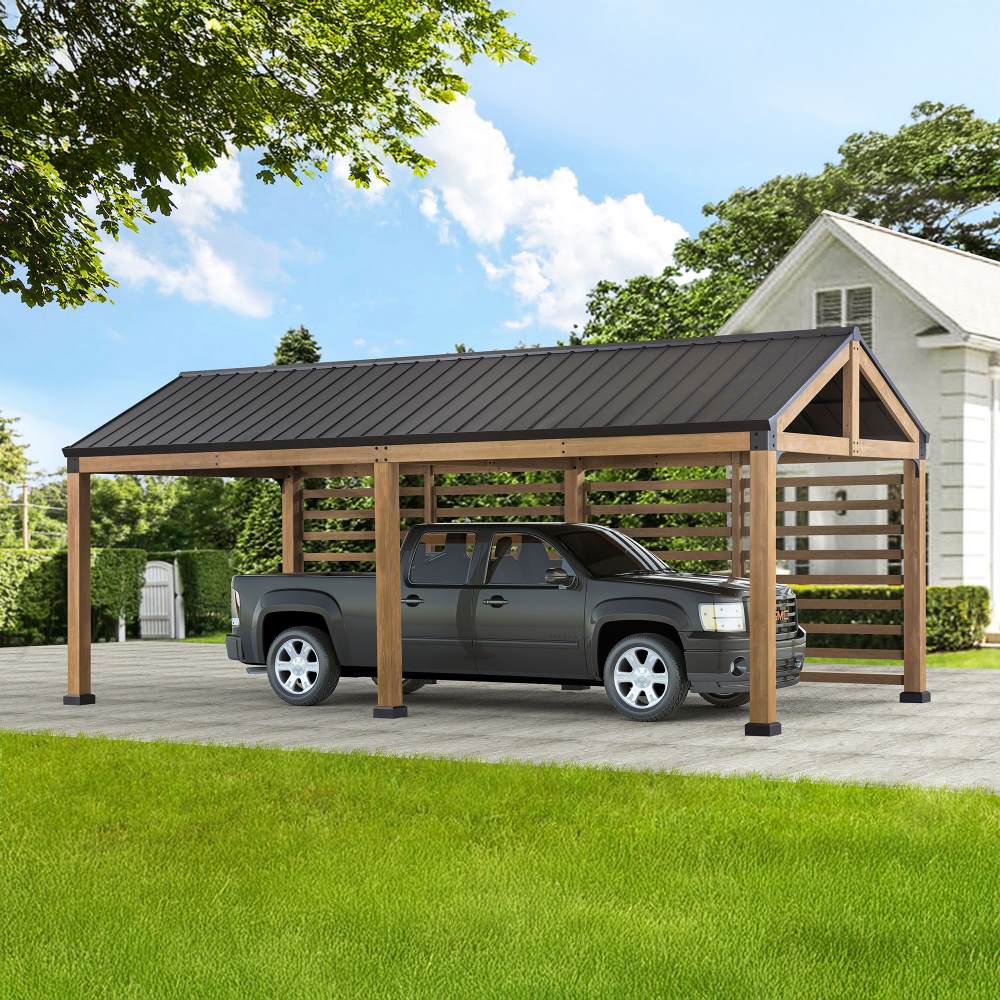
Is Sunjoy Carports right for your yard? Start with keeping access clear around vehicles for everyday vehicle parking
When comparing SUNJOY carports, begin with movement rather than appearance. A covered parking structure needs to fit the vehicle, but the surrounding space also affects how people approach doors, load equipment, walk around the vehicle, and use the rest of the yard. The useful question is not simply whether a shelter can cover a car. It is whether the planned location leaves a practical route for everyday activity.

Start with the space around the vehicle
Map the area as a working space. Consider where the vehicle enters, where doors open, and which side people normally use. Then note nearby fences, walls, planting beds, paths, gates, and outdoor furniture. These details help define the position of the shelter before a shopper focuses on product labels.
This is a planning framework, not a claim about any particular model. A sensible first step is to record the available length and width, then compare those measurements with the selected product’s published dimensions. Allow room for the routines that matter in your household. Someone who only parks and leaves may plan differently from someone who unloads groceries, handles sports equipment, or moves between a vehicle and a rear garden.
Access also includes the route beyond the parking area. A location may look open from the driveway yet become awkward near a gate or narrow side passage. Think through the complete approach: entry, parking, opening doors, walking to the house, and leaving again. This sequence can reveal why a slightly different position may be more useful than placing the shelter at the first available patch of ground.
Match the category to the intended use
The SUNJOY collection describes carports for vehicles, RVs, or equipment. It also discusses possible uses such as an outdoor workspace, shaded patio, or storage area. Those descriptions broaden the ways shoppers might consider the category, but they do not establish that every model suits every purpose. Treat the collection as a starting point, then focus on the use that must work first.
| Page-listed point | What it may help you consider | What not to assume |
|---|---|---|
| Vehicles, RVs, or equipment are discussed as possible uses. | Identify the primary vehicle or equipment and plan its approach route. | Do not assume every model suits every vehicle or clearance need. |
| Outdoor workspace, shaded patio, or storage area are also described as possible uses. | Decide whether parking remains the primary purpose when the area has another role. | Do not treat the broad use list as proof that a particular model fits every secondary use. |
| Steel frames and weather-resistant roofing are described as features of metal carports. | Record the stated material and roofing description when comparing listings. | Do not convert the description into an independent durability or storm-resistance guarantee. |
| Pre-cut parts, hardware, and step-by-step instructions are described as kit contents. | Use the selected listing to understand what the kit presentation covers. | Do not infer installation time, ease, or a particular setup outcome. |
For everyday vehicle parking, access should lead the decision. For an RV or larger equipment, the relevant questions may include the route into the space and the clearance needed around it. For a mixed-use yard, consider whether parking remains the priority when the area is also used for storage or outdoor activity. A product that looks versatile on a collection page still needs to match the specific arrangement planned for the yard.
When reviewing carports for sale, separate three types of information. First, identify what the page directly states about the category or selected model. Second, list the practical requirements created by your yard and vehicle. Third, mark assumptions that the listing does not establish, such as how a particular configuration will work in a specific location. This separation keeps a broad product description from becoming an unsupported promise.
Read construction and kit details carefully
The website describes steel frames and weather-resistant roofing as features of its metal carports. That is the site’s description of the materials and roofing; it should not be read as an independent guarantee of durability, storm resistance, or performance in every setting. For a comparison, record those stated features alongside the exact model information rather than treating them as a substitute for planning.
The collection also describes its kits as including pre-cut parts, hardware, and step-by-step instructions. This information may help a shopper understand what the kit presentation covers. It does not, by itself, answer every setup question for a particular model or yard. A practical comparison should therefore ask what the selected listing says about its parts, instructions, and any included or optional elements.
Setup planning matters to access because the final position is only one part of the decision. Think about how components will reach the intended area, where assembly activity can take place, and whether the finished structure leaves the routes identified at the start. These are planning questions rather than verified claims about installation time, difficulty, or outcome.
Use model-specific questions before choosing
A collection page can introduce a category, but the selected product page is the better place to examine model-specific details. Use a short question set:
- Does the listed configuration correspond to the vehicle, RV, or equipment that will use the space?
- Do the published dimensions fit the available area while preserving the access routes that matter?
- Which features are stated for this model, rather than described generally for the collection?
- Does the listed kit information explain the parts and instructions relevant to the intended setup?
- Will the planned position still work when doors open, people walk through, or the space serves another outdoor purpose?
These questions turn a broad comparison into a decision about fit. They also discourage a common mistake: choosing from a headline feature before considering how the vehicle and people will move through the yard. If access is the central concern, draw the route first and compare products against it.
Make the final comparison practical
A useful shortlist can be simple. Write the primary vehicle or equipment use at the top. Add the available space, the required approach route, and any secondary use such as storage or a shaded sitting area. Then place the page-listed product details beside those needs. This format makes it easier to distinguish a confirmed description from a conclusion you are drawing about your own property.
The strongest choice is the one whose stated configuration fits the planned use without forcing everyday movement into an afterthought. SUNJOY can be a useful starting point for comparing carport categories and listed features, but the decision should remain tied to the selected model, the available space, and the access pattern your household will actually follow.