


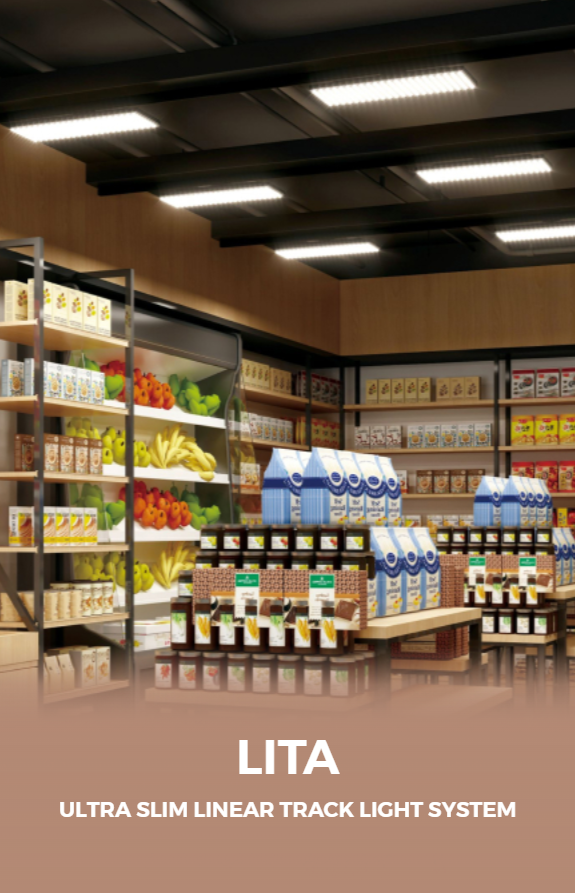
Problem: Lighting that looks fine but performs poorly
Many spaces here end up with glare, patchy aisles, or tired colour that makes staff squint and customers leave faster. Small missteps — wrong lumen levels, poor distribution, or inconsistent colour — add up to big complaints. I’ve specified fixtures for over a decade across commercial jobs, so I spot the usual faults fast: bright spots over desks, dim corners near racking, and retail displays that kill product colour. If you’re already hunting for improvements, start by checking simple replacements like office ceiling lights — often a swap here fixes most complaints, lah.
Why linear lighting solves those common headaches
Linear luminaires give even distribution along work runs and aisles. They reduce shadowing across desks and shelves, and they scale — add or remove modules rather than redoing whole fixtures. Benefits you feel immediately:- consistent illumination across work surfaces;- fewer fixtures for the same coverage, so easier maintenance;- clean lines that suit modern office and retail planning.Because a retrofit in Hong Kong’s Central business district proved, replacing a mix of downlights and old strips with continuous linear runs reduced complaints and maintenance hours within weeks.
What to check before buying
Don’t buy on look alone. Inspect these concrete specs:- lumen output per metre: drives spacing and uniformity;- CRI (Colour Rendering Index): 80+ for general, 90+ for retail product areas;- correlated colour temperature (CCT): pick warm for hospitality, neutral for offices, cool for industrial tasks;- glare control: louvers or diffusers matter if staff face screens;- IP rating for dusty or wet industrial zones.Match outputs to the actual task, not designer mood boards. If you need examples, consider how linear runs compare to point sources for long bench desks and wide retail gondolas — better spread, fewer dark islands.
Common pitfalls and how to avoid them
People often trip on installation and controls:- Overlit spaces because spec assumed higher ceilings than reality. Measure height.- Mixing colour temperatures in one open plan area. Keep CCT consistent.- Skipping lumen-output calculations and guessing spacing. Use a simple lux target per task and layout accordingly.- Ignoring controls: dimming, zoned sensors, or tunable white can save energy and improve comfort, but poorly commissioned controls create flicker or weird colour shifts.Avoid these by validating layout with real measurements and insisting on a commissioning check after installation.
Comparative insight: Types and trade-offs
Linear fittings come in different builds. Compare quickly:- Recessed modules: tidy, good for finished ceilings but need clearance;- Surface-mounted strips: faster install, good for exposed services;- Suspended linear: best for low ceilings or when you need feature lighting.LED engine quality matters more than trim. High-quality drivers and thermal design keep light stable over years. For mixed-use areas, pick modular systems that allow swapping optics rather than replacing whole luminaires.
Installation, commissioning, and maintenance—practical checklist
Follow a short, practical routine to avoid rework:- confirm ceiling heights and run lengths on site;- mock-up a short run and check glare from seating positions;- programme lighting zones and test them during real work hours;- schedule easy-access maintenance: tool-free diffusers and replaceable drivers.Train the facility team on simple tasks: where the drivers sit, how to change modules, and who to call for warranty issues. That saves long service calls.
Alternatives worth considering
If linear doesn’t fully fit, these are realistic substitutes:- high-quality downlights for focused workstations;- track lighting for dynamic retail displays;- high-bay linear for industrial warehouses.Also evaluate integrated sensor systems and daylight-linked dimming. For specific runs that must match decorative ceilings, bespoke linear profiles exist but expect higher cost and lead time.
Final synthesis
You want lighting that stops being noticed for the wrong reasons and starts supporting tasks, sales, and safety. Focus on measured outputs, consistent CCT, glare control, and sensible controls. For practical choices and systems that let you scale or swap parts without redoing ceilings, look for suppliers with local project experience and robust warranties — that’s how a specification becomes a working, low-hassle installation. For a straightforward route to reliable runs and sensible product choices, consider solutions from trieco.
