
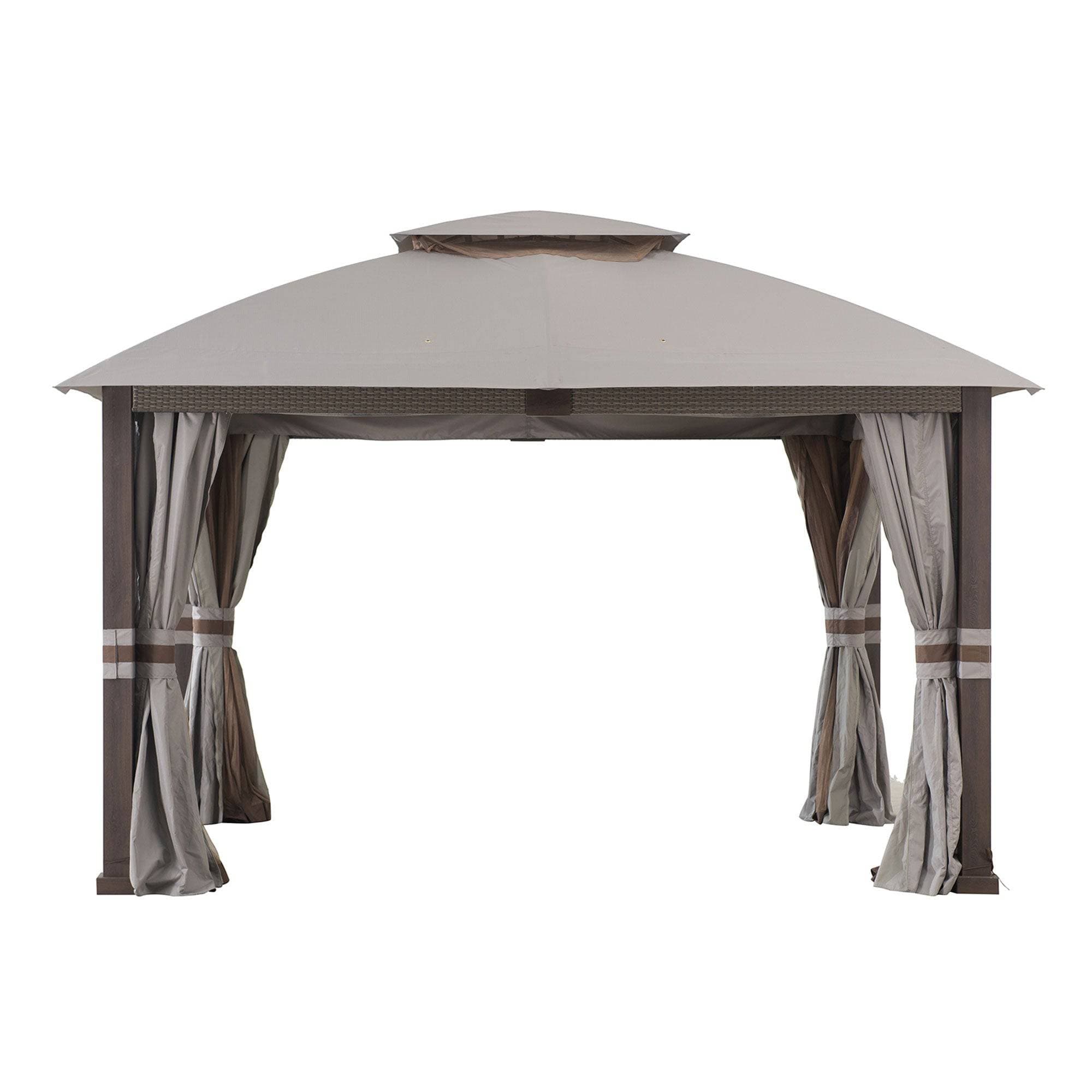
For smaller yards, approach Sunjoy Outdoor Gazebos through shade across different times of day for poolside spaces
Start with the space, not the product label
When vehicle owners plan covered parking near a pool or compact yard, SUNJOY outdoor gazebos should be assessed against the space’s changing shade needs before any model is considered. The central question is not simply whether a structure looks suitable. It is whether the available footprint, vehicle position, walking route, and poolside activity can coexist without creating an impractical layout.

Shade also changes as the sun moves. A structure that shades one side of a yard in the morning may leave another area exposed later. That does not prove that any particular gazebo will provide a desired result, but it does create a useful planning question: where must shade fall during the hours when people use the vehicle, pool, seating, or access path?
Separate parking needs from poolside shade
Covered parking and poolside shade may be close together, but they are not automatically the same design problem. A vehicle owner may need clearance for doors, turning, loading, or routine access. Pool users may value shade beside seating, a walkway, or the edge of the water. In a smaller yard, placing one structure to serve every purpose can create competing demands for space.
Sketch the yard at several times of day and mark the fixed elements first. Include the vehicle’s parked position, pool boundary, fences, doors, equipment, furniture, and the route people will walk. Then mark the areas where shade would be most useful in the morning, around midday, and later in the afternoon. This simple exercise helps distinguish a genuine space constraint from a product-page preference.
Use page-listed details as comparison points
The collection page lists hard-top, soft-top, and wood gazebo categories. It also displays product listings with sizes and material or roof labels. Those labels are useful starting points because they make the initial comparison more concrete. They do not, by themselves, establish how a selected model will fit a vehicle, shade a poolside area, or suit a particular site.
The page also shows examples involving cedar, PC-roof, aluminum, solar, poolside, and pergola products. These are displayed product examples, not a basis for assuming that every listing has the same construction, roof treatment, intended use, or included features. Treat each label as a prompt to inspect the individual listing rather than as a collection-wide promise.
For a compact yard, backyard gazebo options can be compared more carefully by using the page’s available filters. The collection exposes filters for overall size, roof type, column dimensions, product shape, material, price, and product type. A practical comparison begins with the dimensions and shape that fit the drawn layout, then considers the other labels that distinguish one listing from another.
Compare shade timing with physical constraints
Think in terms of trade-offs rather than a single “best” option. A larger footprint may cover more of an activity area, but it can reduce manoeuvring room around a vehicle or limit access to the pool. A smaller footprint may preserve circulation, yet place shade farther from the area where it is wanted. The right balance depends on the actual yard and the hours of use.
Roof and material labels can support an organised shortlist, but they should not be converted into unsupported performance conclusions. For example, a page-listed roof type tells you how the listing is categorised. It does not independently confirm the exact shadow pattern, heat level, weather performance, or suitability for a vehicle. Those questions require model-specific information and a site-based assessment.
Use the same logic for columns and shape. Column dimensions may affect where a vehicle can pass or where furniture can sit, while product shape may affect how the structure aligns with a pool edge or boundary. These are planning questions, not guaranteed outcomes. Measure the clear space available and compare it with the selected listing’s stated information.
| Page-listed detail | Planning question for a compact yard | Evidence basis |
|---|---|---|
| Overall size | Does the listed size fit the drawn footprint while preserving vehicle and poolside access? | The collection exposes an overall-size filter. |
| Roof type and material | Which listing details should be compared before making assumptions about shade or site suitability? | Listings display material or roof labels, and the collection exposes roof-type and material filters. |
| Column dimensions and shape | Will the proposed position leave usable clearance around the vehicle, pool, and walking route? | The collection exposes column-dimension and product-shape filters. |
| Product category or example label | Is the listing being treated as a comparison prompt rather than a guarantee of identical features across models? | The collection lists hard-top, soft-top, and wood categories and displays examples including poolside and pergola products. |
Build a model-page checklist
Before narrowing the choice, record the facts that matter to the layout. Confirm the listed overall size, roof type, material, shape, and column dimensions for the exact model under consideration. Note whether the listing’s product label matches the intended use, such as poolside or pergola, without assuming that the label resolves the parking question.
Next, test the proposed position at different times of day. Ask whether the vehicle remains accessible, whether people can reach the pool without crossing the parking area, and whether the most important shade zone remains in the intended location. These are recommendations for evaluating the layout, not claims about the performance of a particular gazebo.
A useful final check is to compare the shortlist against the original drawing rather than against appearance alone. Remove any option whose stated dimensions or shape conflict with the available footprint. For the remaining models, keep page-listed facts separate from your own conclusions about movement, shade timing, and everyday convenience.
Make the next step practical
The live collection can change, so do not treat it as a fixed inventory of models, sizes, or stock. Its current categories, product listings, and filters provide a way to organise the search, while the selected product page supplies the details for the specific model. That distinction matters when a compact yard must support both covered parking and poolside use.
In short, begin with shade locations across the day, map the vehicle and poolside circulation, and then use listed size, roof, material, shape, and column details to narrow the field. SUNJOY is most useful here as the starting point for a structured product-page comparison, not as a substitute for measuring the yard and testing the proposed layout.