


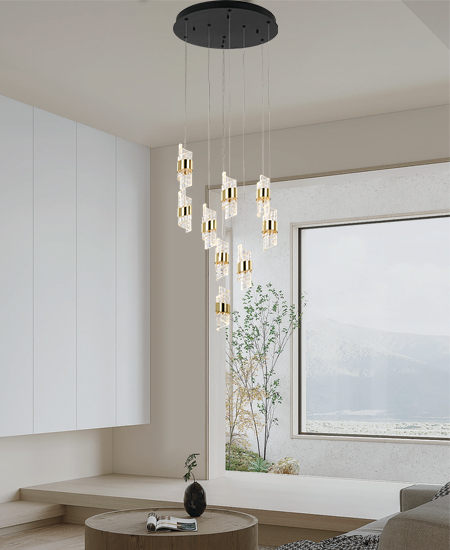
When Light Writes the First Bar
Light sets the mood faster than paint, furniture, or even music. In a busy designer lighting company, that truth shows up every day at first switch-on. Imagine a quiet lobby at dusk: metal warms, glass breathes, and a single fixture cues the whole score. If the piece is designer chandelier lighting, the stakes feel higher, because it’s not just lumens—it’s a signature. Data lives in the details: 3000K versus 2700K shifts the room’s “tempo,” CRI in the 90s keeps skin tones honest, and a smooth 0.1% dim matters when the night wants to whisper. Yet the lumen meter can be right while the vibe is wrong (we’ve all seen it). So, how do you score a chandelier so it sings instead of shouts, anchors the sightline, and never steals the scene?
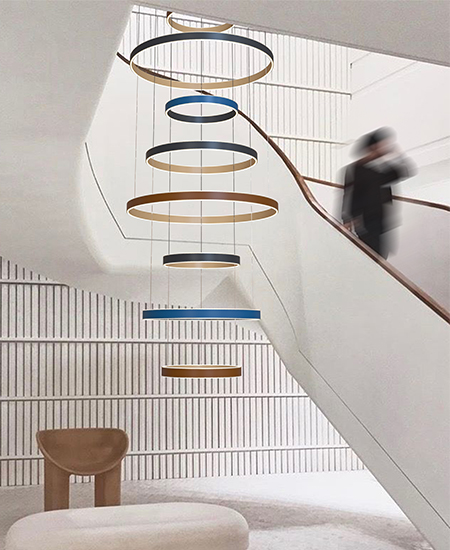
Bold answer: compare by behavior, not by brochure. Test glare, dimming curve, and mounting stress, and then ask how the room breathes with it—over time. Let’s step into the friction before we map the fix.
Under the Shade: The Hidden Friction in Chandeliers
Where do chandeliers go wrong?
Traditional choices look perfect on paper—and then flicker at dinner. The usual culprit is a mismatch between wall dimmers and LED power drivers, which bends the dimming curve and nudges visible ripple. PWM can buzz; phase-cut can step; constant-current drivers may drop out at the low end. Optics that are pretty in plan view can blast a table with glare, while the ceiling floats in shadow. Then there’s weight: a dense canopy can overwork anchors and junction boxes, raising install risk and limiting placement. Look, it’s simpler than you think: align control protocol to the driver, align optics to the task, and treat mounting as structure, not afterthought.
Hidden pain shows up in maintenance. Enclosed heads trap heat, so thermal management struggles, lumen output sags, and finishes age fast—funny how that works, right? CRI may hit the spec sheet at 90+, but consistency across batches can drift and shift the room’s color story. Cleaning becomes a circus when crystal fields tangle with short service loops. And the “dim-to-warm” that felt cozy in the mockup can crush contrast in real scenes. The deeper layer is usability: predictable 1% to 0.1% fade, a stable glare index, and serviceable assemblies that respect human hands.
Comparing What’s Next: Principles Over Postcards
What’s Next
The shift is from parts to systems. New drivers deliver high-resolution fades (think 16-bit steps) with near-zero flicker index under cameras and eyes. Tunable-white engines move from 2700K to 4000K without CRI loss, so the “mood chord” holds true. TIR optics and soft diffusers map light where people are, not where the fixture is. And networked controls—DALI-2, DMX/RDM, or low-latency Bluetooth mesh—keep scenes steady across loads. The result is a chandelier that behaves like an instrument: smooth attack, long sustain, clean decay. Lighter frames and composite arms cut mass without cheapening feel; better heat paths extend LED life and finish quality. Compare this to the old stack of generic dimmers and chunky housings, and the difference isn’t subtle—funny how that works, right?
Supply and support matter, too. The most elegant form still needs sensible wiring, service loops, and documented drivers. The best lighting design manufacturers now build modular canopies, quick-connect harnesses, and labeled constant-current paths that make field service calm. Some even add tiny edge nodes that watch temperature and current on the power converters, flagging issues before a dinner rush. The near future looks pragmatic: fewer SKUs, smarter configs, better optics, and a bias toward low glare and deep dimming that works in rooms with cameras, mirrors, and people. That’s not hype; it’s a change in principle—precision over excess.
How to Choose with Confidence
Advisory close, three metrics that travel well: First, dimming performance you can feel—clean, flicker-free fades to 0.1% across the actual control you’ll use (not a lab bench). Second, optical comfort—balanced beam and diffuser strategy that lowers perceived glare and holds contrast on faces and food; confirm with a reasonable glare index and a CRI that stays consistent across replacements. Third, service and structure—mounting detail, heat path, and access. Ask for drawings that show thermal headroom, clear driver specs, and a maintenance plan you can do with a ladder and calm hands. Choose with ears as well as eyes: does the room breathe when it dims? If yes, you’ve got a chandelier that will carry the tune, not just the look, with kinglong in your corner.
