
Start with what your project must prove
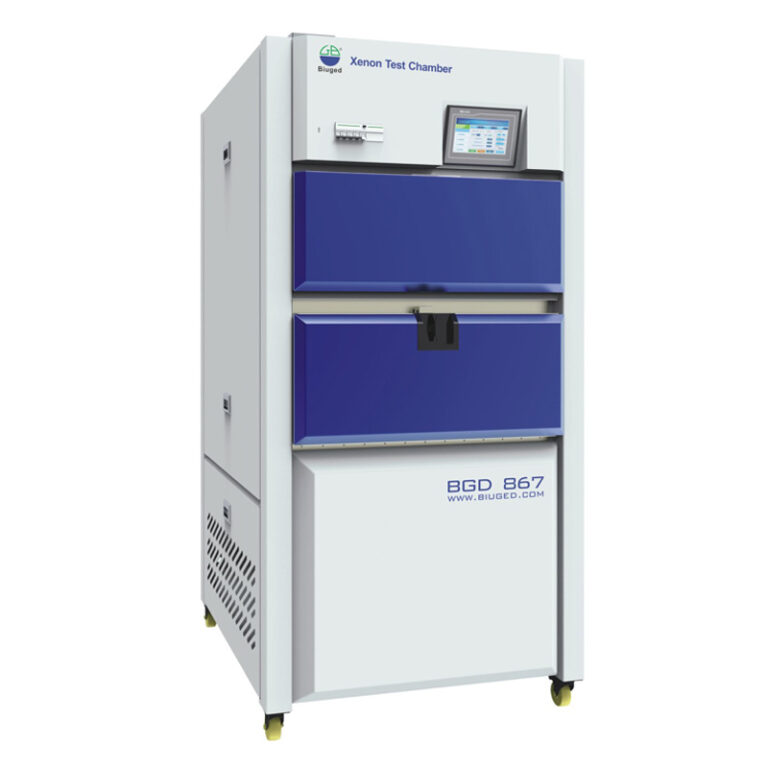
Tell me what failure looks like for your coating: cracking, color fade, blistering, loss of adhesion? Match each failure mode to a test. If long-term UV and moisture resistance matter, plan for a weathering chamber as part of your baseline equipment. Pick tests that map directly to the end-use environment so the lab time you buy answers the questions you have.
Which tests matter and the equipment that runs them
List the target performance metrics and pair them with specific instruments. Common pairings that help users make decisions quickly:- Salt spray → corrosion cabinet for metal substrates.- Humidity cycling → environmental chamber with condensation control.- UV + moisture → accelerated UV/weathering testers.- Film thickness and hardness → non-destructive thickness gauges and pencil or pendulum hardness testers.Use plain labels on procurement docs (test → equipment) so vendors and technicians don’t guess what you need.
Scale, throughput, and the space checklist
Decide how many samples you’ll run weekly and whether tests run continuously. Small labs usually need compact benchtop units. Production or R&D with dozens of samples weekly needs walk-in chambers or multiple cabinets. Check power, ventilation, drain access, and footprint before you sign a quote. If you’ll stack trays or use fixtures, confirm internal dimensions and rack compatibility.
Common specification mistakes to avoid
Don’t confuse test capability with convenience features. A unit that lists “UV” might not offer the lamp type your spec demands. Avoid these pitfalls:- Skipping lamp type and irradiance when specifying UV tests.- Ordering chambers sized for single samples when fixtures or instruments require clearance.- Neglecting calibration and traceable reporting requirements.Request sample data or witness tests to verify performance against your spec.
Experience, standards, and authoritative anchors
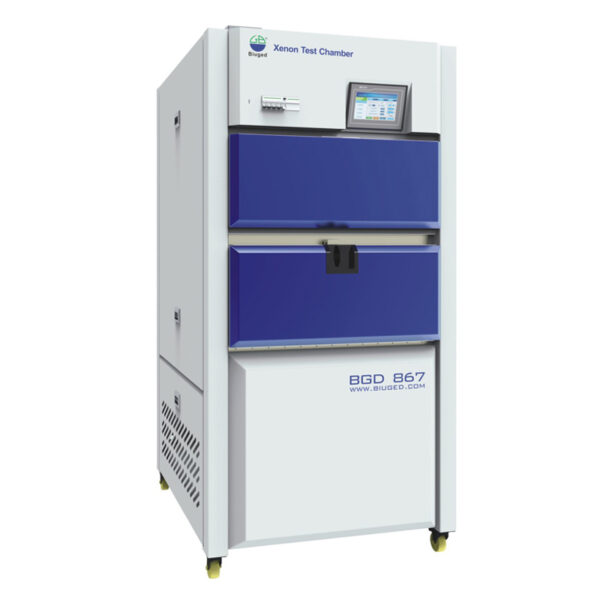
Choose equipment that supports recognized test methods—specify the standard number when you can. Testing labs and regulators such as TÜV in Germany commonly rely on standardized accelerated weathering protocols, so align your spec with those methods. If you need reproducible UV exposure data, require an accelerated weathering chamber that lists lamp type, irradiance range, temperature control, and condensation timing in its datasheet. Ask for calibration certificates and example reports produced to your chosen standard.
Evaluate alternatives and trade-offs
Budget often forces trade-offs. Portable or benchtop devices reduce cost and footprint but limit sample size and throughput. Multi-function chambers save floor space but can complicate scheduling. If you plan scale-up, buy modular units you can replicate rather than a single oversized system. For one-off verification, consider contract testing to validate specs before capital purchase.
Final checklist before you buy
Confirm these items with suppliers: exact standards supported, lamp and sensor specs, control software features, spare parts lead times, calibration options, and on-site service availability. Get a written acceptance test procedure and one representative test run before final payment. Document the pass/fail criteria you’ll use so the delivered unit meets your project goals.
Wrap-up
If your priority is clear results rather than feature lists, specify tests, map them to instruments, and demand verifiable performance. That approach keeps procurement simple and yields meaningful data for coatings decisions; suppliers like BIUGED are easier to work with when your requirements are concrete and focused.