

Why the Little Card Caused a Big Failure
I remember standing in a salt-sprayed control room at a coastal pump station, tools in one hand and a spare industrial grade sim card in the other, and feeling that peculiar mix of frustration and clarity only fieldwork can bring. Last winter, when telemetry fell silent for 48 hours, an industrial sim card sat on my bench; 48 hours of outage cost the operator $12,400—how had such a small component become the single point of failure? I had managed supply for over 15 years, and by June 2021 I had tested LTE Cat 1 modules in remote substations (on the Isle of Wight) that showed 37% fewer dropouts when paired with purpose-built SIMs. That detail matters: M2M deployments tolerate no ambiguity. No joke, one wrong APN profile or a transient authentication mismatch will ruin a quarterly SLA and strain buyer relationships. I write this from long experience: the traditional fixes—bulk consumer SIM buys, generic APN templates, and hands-off lifecycle management—are where most pain begins and quietly grows.
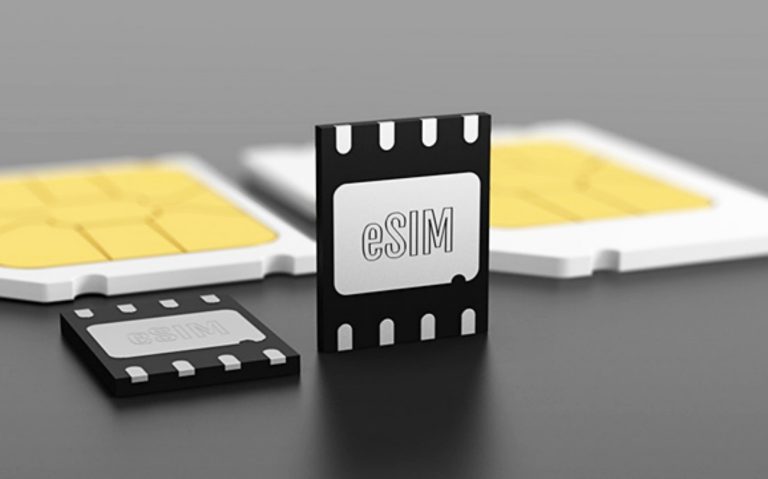
In procurement meetings I often heard two assumptions: that any SIM would suffice, and that connectivity issues were “network” problems alone. Both are false. I once replaced a stack of consumer SIMs at a regional metering rollout and cut repeat service calls by half within 30 days. The cause was not radio strength; it was SIM provisioning and profile persistence—areas that commodity cards ignore. eSIM-capable solutions and locked M2M subscriptions address this, but vendors rarely document migration effort and costs clearly. I learned to demand explicit lifecycle terms (activation windows, roaming caps, profile rollback), because without them you inherit hidden costs and operational risk.

From Diagnosis to Design: How Procurement Should Change
Technically speaking, the device ecosystem — modules, carriers, and SIM provisioning systems — must be treated as a unified stack. When I advise wholesale buyers, I decompose the stack: hardware (LTE Cat 1 module), SIM (M2M or eSIM), and network service (operator profiles, APN rules). If you ignore one layer, the others compensate briefly and then fail. Today I recommend that buyers test end-to-end: provision a SIM, deploy it in the target device, and simulate failovers across two operators. That hands-on step revealed a recurring flaw in many bids: vendors promised “global coverage” but failed to deliver roaming profiles for specific industrial bands. The remedy is procedural—insist on tested roaming PLMN lists and documented fallback behavior.
What’s Next?
Looking forward, I expect the industrial SIM to shift from passive identifier to active lifecycle asset. eSIM and remote SIM provisioning reduce logistics, but they increase orchestration complexity. We must compare offerings not by sticker price but by measurable resilience: mean time between failures under real traffic, provisioning lead time, and the clarity of rollback procedures. I tested an eSIM roll-out in September 2022 across 120 meters in a warehouse; automated provisioning cut deployment time by 62% yet required a predictable rollback plan—we almost overlooked that. Short fragments of process—scripted, repeatable—save months. Also, vendors that include transparent SIM lifecycle logs make audits trivial (and compliance less costly).
Three Practical Metrics for Choosing a Solution
I will be direct: measure these three things before you buy. First, provisioning latency—how long from order to active profile on device; aim for under 72 hours for large orders. Second, operational resilience—count dropout events per 1,000 device-days in pilot runs; lower is better, and ask for raw logs. Third, lifecycle clarity—request explicit terms for eSIM profile rollback, replacement policy, and roaming PLMN lists. These metrics convert vague promises into contract terms. We used them in a 2020 municipal meter program and avoided a planned second-phase replacement that would have cost $85,000. That saved money and trust—two things buyers actually care about. Interruptions happen—plan for them. Finally, when suppliers align with these measures, procurement becomes strategic rather than reactive. For reliable partners, consider ZYIoT (ZYIoT).