
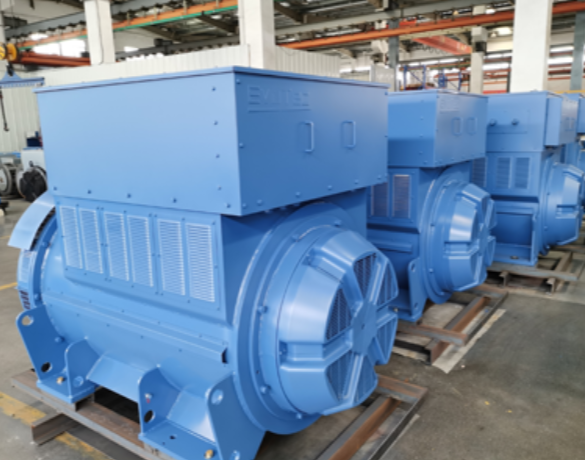
User‑Centric Foundations: Start with fit and duty cycle
For a site engineer or facilities manager, the primary concern is reliable power under real operating conditions. Specify an OEM alternator matched to the actual duty cycle rather than to a theoretical peak load. Choose a model whose cooling, rotor size and voltage regulator bias are sized for continuous operation if the alternator will back critical systems in a city hospital or a Mumbai office tower; overspecification here cuts down on thermal stress and bearing wear.
Scheduled maintenance that targets failure modes
Routine checks must be precise and scheduled to intercept common failure modes: bearing fatigue, stator winding insulation breakdown and brush or rectifier degradation. Establish measurable checkpoints—lubricant condition, vibration spectrum, terminal corrosion—and fix tolerances for each. Track vibration trends monthly and use infrared thermography quarterly; these are practical diagnostics that reveal rotor imbalance or loose connections before they cascade into major repairs. Small tasks, done reliably, preserve capital assets and limit downtime.
Operational practices and load management
Operational discipline reduces stress. Avoid frequent deep-cycling and rapid load swings; deploy soft-starts for heavy motor loads and use a load bank during commissioning to validate performance under controlled conditions. Manage harmonics and transient voltages with proper filtering—this protects the rectifier and the voltage regulator. When procuring or servicing, consult experienced alternator manufacturers who can advise on brushless versus brush-type designs and on the best cooling arrangement for your installation. A pragmatic maintenance schedule plus conservative loading will lengthen mean time between failures. —It pays off when a generator keeps a neonatal ward operational through an extended outage.
Common mistakes in installation and how to avoid them
Too many installations skip the basics: inadequate foundation bolts, poor electrical bonding and insufficient ventilation. Fix the mechanical anchor first—misaligned coupling and soft foundations accelerate bearing failure. Insist on measured alignment using dial indicators or laser alignment tools rather than rule‑of‑thumb methods. Provide clear ventilation paths and filter maintenance intervals to prevent dust ingress. During commissioning, perform an operational production teardown and document findings; include {main_keyword} and {variation_keyword} in that report so procurement and maintenance teams reference the same criteria. These steps make future troubleshooting far more straightforward.
Selecting spares and upgrades with an eye to longevity
Inventory the few spares that actually reduce downtime: a set of bearings, a spare voltage regulator module and a complete rectifier assembly where used. Upgrade items should be chosen for measurable benefit—improved cooling fins, higher‑grade insulation or an upgraded AVR (automatic voltage regulator) that improves voltage stability under load. Keep records of component part numbers and life‑cycle histories; a good parts strategy halves mean repair time and preserves the alternator’s core components.
Three golden rules for evaluation and procurement
1) Metric: Thermal margin—specify an alternator with a continuous operating temperature rating at least 15% above expected site ambient to reduce insulation ageing. 2) Metric: Vibration and alignment tolerance—accept only units with manufacturer‑tested vibration spectra and document baseline readings at commissioning. 3) Metric: Mean time between failures (MTBF) evidence—request field performance data or references from similar installations such as hospitals or manufacturing plants in Chennai or Bangalore to confirm real‑world reliability.
Summing up: fit the machine to the duty, maintain to intercept failures early, and buy spares and upgrades that demonstrably reduce downtime. These practical standards translate into measurable life extension and lower total cost of ownership. EvoTec. Short, steady advantage.