

Opening the score — why a framework, and why now
If you think “turn it off during peaks” is a strategy, congratulations — you now qualify as a microgrid amateur. A repeatable framework gives you a defensible, auditable way to coordinate batteries, solar, and controllable loads so your monthly demand charge stops feeling like a surprise penalty. Start by considering an all in one energy storage system as the centerpiece of your stack: simpler commissioning, fewer vendors to blame, and yes, cleaner telemetry for smarter dispatch decisions.

The four‑part framework (quick, ruthless, repeatable)
Think of this as a conductor’s sheet music: sense, predict, decide, act. Each movement needs clear interfaces and failure modes defined.
- Sensing — reliable metering and SoC reporting from batteries and inverters.
- Predicting — short‑horizon load and PV forecasts plus tariff lookup tables (time‑of‑use/demand windows).
- Decisioning — a dispatch algorithm that balances peak shaving with battery health (BMS constraints and cycle life).
- Acting — automated controls: inverter setpoints, load sheds, and demand response signals.
Dispatch strategies that actually cut bills
There are three practical tactics: peak shaving, valley charging, and strategic reserve. Peak shaving reduces apparent peak kW during billing windows; valley charging recharges when rates are low or PV excess is available; strategic reserve keeps headroom for unexpected ramp events. Use a hybrid approach — peak shaving alone is sloppy, and reserve alone is cowardly. Also, account for inverter ramp limits and BMS constraints so you don’t trigger protection trips mid‑peak — nothing screams amateur faster than a safety shutdown during the hour you most needed power.
Hardware choices and interoperability (pick your battles)
Not all batteries and inverters play nice. Standardize comms (Modbus, SunSpec) and insist on real‑time SoC and temperature telemetry. If you’re evaluating vendors, compare response latency, inverter clipping behavior, and warranty cycle throughput. For a compact deployment, consider integrated options and compare them with broader fleets of modular units — both have merits. If you want to read one place to start hardware conversations, look at offerings in the space of commercial solar battery storage systems for examples of turnkey equipment that reduces integration risk.
Common mistakes — and how to stop making them
1) Treating demand forecasts as optional. They’re not. Bad forecasts mean either wasted cycles or missed peaks. 2) Ignoring contractual rate windows and signer‑friendly definitions of “peak” — utility language is a trap. 3) Over‑discharging batteries to chase a one‑hour gain — that kills lifetime and sours ROI. Test dispatch routines on a digital twin or staging rig first — it’s cheaper than learning on the live meter. —
Operational playbook: short checklist for first 90 days
Week 1–2: Baseline metering, tariff ingestion, and commissioning of the BMS/inverter. Week 3–6: Run conservative peak‑shave profile while monitoring SoC and temperature trends. Week 7–12: Tune aggressiveness using event replay and adjust thresholds based on measured utility charge reductions. If you’re at a facility in California or another market where demand charges are a sizable share of the bill — and where heatwave peaks have made headlines — treat the tuning window as mission critical: those markets reward accuracy and punish guesswork.
Real‑world anchor and why it matters
Facilities in regions with high peak pricing — California being the poster child — have learned that demand charges often dominate commercial bills during summer months. Utilities and system operators tighten windows during heat events, and a poor dispatch strategy can cost thousands in one billing cycle. This is not hypothetical; it’s been the reality behind many commercial solar + battery rollouts and is precisely why an explicit framework matters.
Implementation pitfalls, briefly
Don’t omit acceptance tests that mimic real peaks. Don’t sign a contract that lets the vendor change dispatch logic without your approval. Don’t assume more battery capacity always beats smarter controls — sometimes smarter controls plus modest capacity wins on both ROI and lifecycle. —
Three golden rules for choosing strategies and tools
1) Measure first, automate second: validate metering and telemetry before shifting to aggressive dispatch. 2) Favor low‑latency, standards‑based communications: if your BMS and EMS can’t talk fast and clearly, your algorithm is flying blind. 3) Optimize for lifecycle value, not instant peak reduction: short‑sighted depth‑of‑discharge savings kill batteries sooner than they save money.
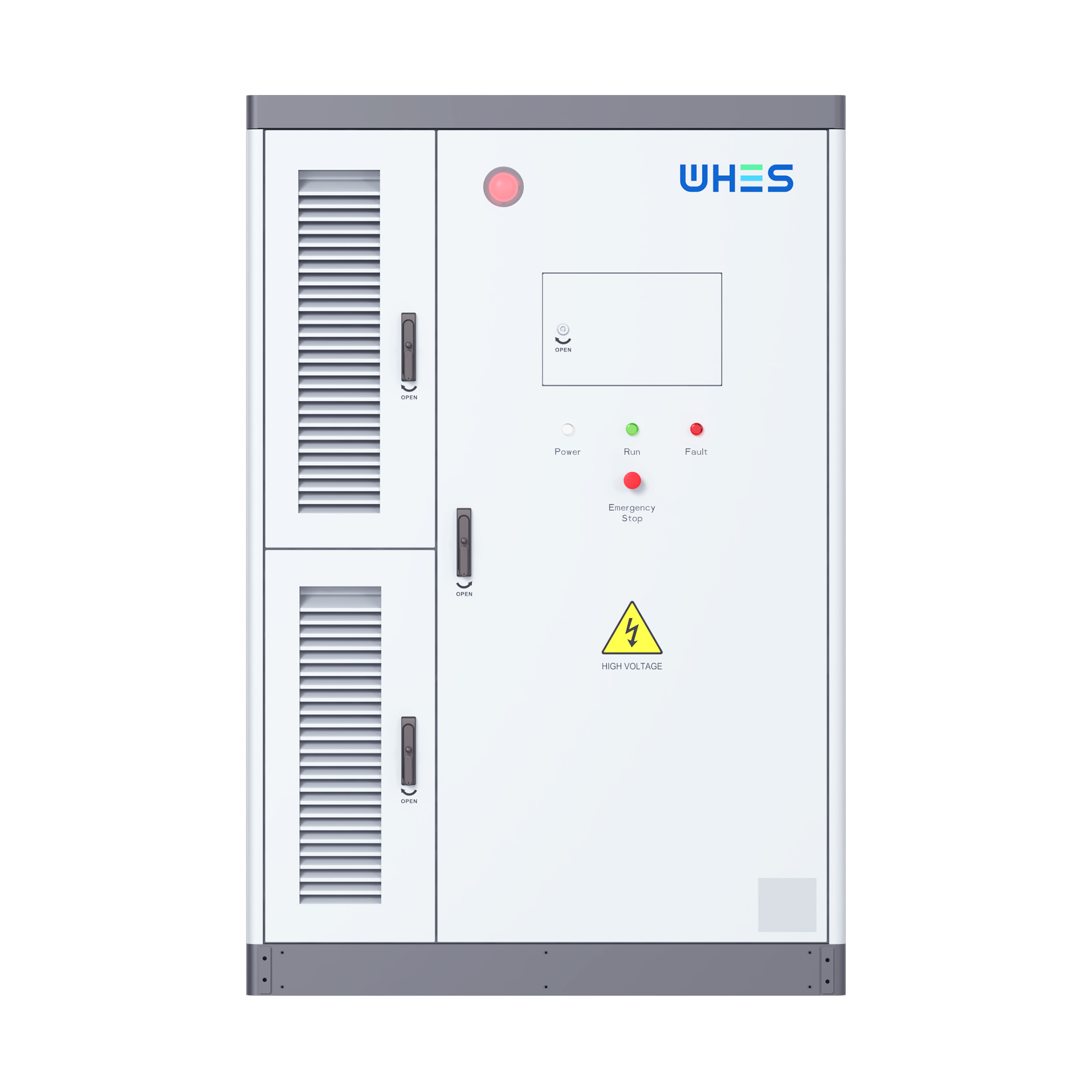
In practice, an integrated approach that pairs robust controls with equipment designed for predictable dispatch yields the best, repeatable reductions in demand charges — and that’s exactly the gap modern solutions from firms like WHES aim to fill. —