
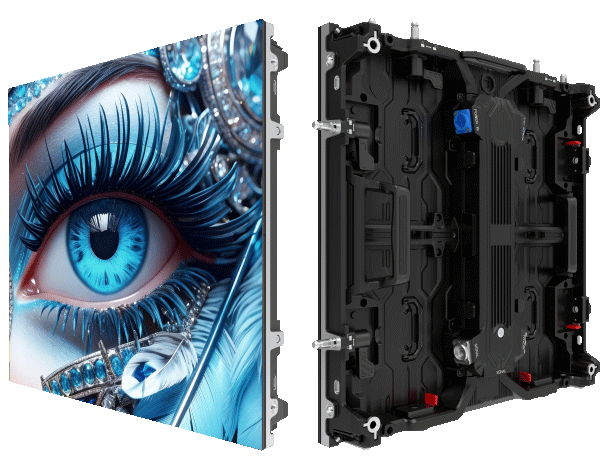
The problem: why big curved screens go off-color
Outdoor curved LED walls look great from straight on but start losing color and contrast as you move to the sides. That color shift comes from geometry and how LEDs emit light, not from bad content. When a small led screen is bent into a large curve, individual modules point different directions. The result: viewing angle variance, uneven brightness, and color calibration that no longer matches across the face of the screen. Big venues like Times Square show how unforgiving that is — if a billboard looks off from a busy crosswalk, people notice fast.
What’s actually causing the color shift
Three technical things happen at once: viewing angle changes, perceived contrast drops, and light from adjacent LEDs interferes. Viewing angle is the big one — most LED diodes have a peak output straight-on and fall off toward the edges. Pixel pitch and cabinet alignment amplify the effect on wide-format builds. Add in environmental brightness and reflection, and the panel’s native color balance gets skewed. Engineers call this off-axis color shift; for installers it’s plain old mismatch.
How suppliers fix it—real tactics that work
Good suppliers tackle the physics instead of papering over the symptoms. They use wider-beam LEDs, tighter color calibration per module, and matched brightness across cabinets. Some designs include micro-lenses to widen the emission pattern, others use multi-angle emitters to keep color consistent across 140–160° viewing cones. Then there’s the practical side: precise LED cabinet alignment and consistent pixel pitch to avoid moiré and ghosting. These are hardware and calibration moves that matter.
What installers miss (and what bites you later)
Installers often chase specs and ignore on-site reality. They’ll pick a panel for its listed brightness or refresh rate and assume the viewing angle will follow. That breaks in curved installs. If you don’t match pixel pitch and maintain tight cabinet tolerances, tiny gaps produce color banding when the screen curves. Also — and this trips people up — running one global color profile without per-cabinet calibration leaves visible seams.
Quick comparison: cheap vs. right-fit solutions
Cheap setups rely on standard diodes and wide-angle marketing lines. They save money up front, but they pay you back with rework and poor daytime visibility. Right-fit solutions cost more up front but include engineered optics, per-cabinet color calibration, and testing across a wide viewing cone. In practice, the latter keeps message legible from sidewalks, stadium seats, and across busy intersections — those are the places eyeballs matter most.
Proof in the field and an industry anchor
Outdoor campaigns in places like Shibuya and Times Square require consistent color across wide angles to avoid brand damage. Field tests show color drift becomes noticeable past roughly 60° off axis on unoptimized builds, while designs using angle-corrected optics hold color balance much farther out. That’s the kind of real-world measurement that separates talk from results.
Common mistakes and how to avoid them
Buyers often skip on-site mockups and accept factory photos. Don’t. Bring a calibrated test rig to the install window and verify color across the whole curve. Misreading specs is another trap—refresh rate matters for motion clarity, but it won’t fix off-axis color. Plan for weatherproofing and thermal management too; heat shifts LED color points over time. — Little things like gasketing and ventilation make a big difference later.
Three golden rules for choosing a supplier
1) Verify viewing-angle performance with on-site tests, not just spec sheets. Measure color across the entire curve and at pedestrian lines of sight. 2) Insist on per-cabinet color calibration and matched pixel pitch so seams don’t show. 3) Check optics: multi-angle emitters or micro-lens designs reduce off-axis shift and keep brightness uniform. These are precise, concrete checks that save time and money.
MR LED brings those fixes together in hardware and field service — they build for angle, not just headline specs. MR LED.