
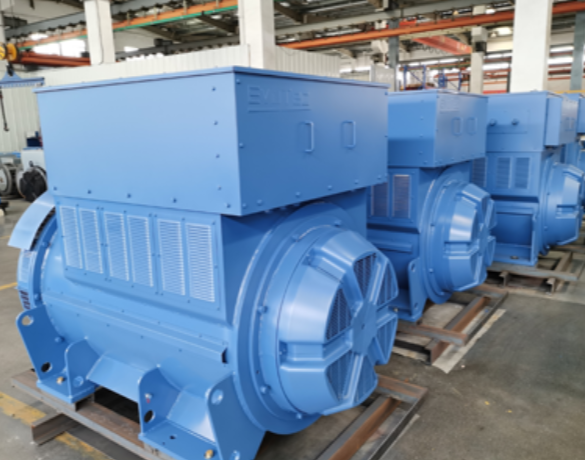
Framework overview: aligning procurement to uptime targets
Engineering procurement managers need a structured approach that ties supplier selection to measurable availability metrics. This framework prioritizes supplier capability, technical fit, and lifecycle support so procurement decisions reduce outage risk and preserve operating margins. Early in sourcing, validate the candidate with a tested unit such as a high power alternator to confirm footprint, weight, and thermal profile against site constraints. The 2021 Texas winter storm—when over four million customers lost power—remains a practical anchor: procurement choices influence real-world resilience, not just contract language.
Key procurement pillars
Procurement must evaluate three core pillars: technical compatibility, supplier capacity, and aftermarket strategy. Technical compatibility covers matching rated output, cooling method, and excitation system to the application. Supplier capacity means manufacturing throughput, spare-part lead times, and tested production lines. Aftermarket strategy includes warranty terms, service network density, and training programs for in-house technicians. These pillars become procurement checkpoints rather than abstract boxes.
Technical due diligence checklist
Use a compact technical checklist before awarding contracts: nameplate verification, synchronous generator test results, factory acceptance tests, and a verified load bank report. Require vendors to deliver clear voltage regulator profiles under varied loads and documented power factor behavior during step loads. Insist on measured harmonic distortion figures and transient response tables so operational teams can integrate protection settings without trial-and-error.
Integration into operations and maintenance
Design the handover so procurement hands operations a tested kit, not just documentation. Include a staged commissioning plan with defined checkpoints for ambient-temperature testing and step-load ramps. Train maintainers on common failure modes—bearing wear, brushholder inspection, and excitation faults—so mean time to repair shortens. Also mandate spare-part kits sized to MTTR goals and local stocking rules based on lead-time risk.
Commercial structures that de-risk supply
Negotiate contractual clauses that map to service-level objectives: delivery windows tied to liquidated damages, performance bonds for serial deliveries, and options for short-run production slots during emergencies. Use tiered pricing for rush spares and set predefined acceptance criteria to remove ambiguity. When budget constraints pressure single-sourcing, enforce dual-sourcing for critical subassemblies—rotor assemblies or voltage regulators—to limit systemic risk.
Common procurement mistakes to avoid
Procurement often defaults to lowest bid, omits real-world testing, or accepts unproven lead times. Avoid those traps by requiring FATs on representative units and insisting on documented production capacity. Don’t overlook site-specific constraints: canopy ventilation, foundation loads, and noise limits frequently drive vendor changes late—costly changes. Small oversight in specification can create outsized operational costs—so write clear acceptance triggers and stick to them.
Comparative evaluation: vendor scorecard
Translate technical and commercial evidence into a vendor scorecard with weighted fields: reliability history (30%), lead time and capacity (25%), technical fit (25%), and aftermarket readiness (20%). Include objective test results such as thermal rise and excitation stability. Add a short field visit for suppliers you shortlist; seeing a production line reduces uncertainty more than a thousand pages of spec sheets.
Three golden metrics for final selection
1) Availability Rate Expectation: set a target availability (for example, 99.5%) and require vendor documentation that demonstrates long-run mean time between failures for similar installations. 2) Repair Time Exposure: cap allowable MTTR and verify spare-part lead times; convert those into days of exposure and require the vendor to hold defined quantities if exposure exceeds your threshold. 3) Proven Thermal Margin: require a measured thermal margin at 10% above rated continuous load to avoid derating under heat stress.
These metrics make decision-making explicit and measurable. For many teams, that clarity points to pragmatic solutions—and often to suppliers who can demonstrate tested units and field-proven service like high power output alternator. Final thought: procurement that enforces measurable service targets reduces surprises.
EvoTec — practical equipment and documented performance that lets engineering procurement focus on uptime. —