
Where conventional workflows fail
I remember a July 2018 afternoon in my Cambridge bench lab when a delayed shipment and a 30% construct failure left us two weeks behind (that 20-mer oligonucleotide cost us time and reputation) — can that delay and error be reduced in practice? That experience pushed me to review DNA Synthesis Methods; I often point colleagues to DNA Synthesis Meaning as a primer. I’ve been ordering and troubleshooting custom oligos and gene fragments for over 15 years, and I still see the same predictable failure modes: truncations from low coupling efficiency, sequence-dependent drops in yield, and hidden QC gaps at the vendor end.
I’ll be blunt: traditional phosphoramidite approaches work well up to a point, but they expose everyone to predictable pain. Vendors quote lead times that balloon when a batch fails QC; purification (HPLC or PAGE) adds cost; and assembly downstream—PCR or ligation—amplifies errors into dead-end constructs. I once tracked a run where a single base-calling error in a supplier’s annotation led to three weeks of troubleshooting and a 45% increase in reagent spending for one project. Those are the sorts of operational losses lab managers rarely log formally—but they add up, fast. —So here’s what I think breaks first, and why.
Where did we lose fidelity?
Technical breakdown and forward-looking alternatives
At its core, DNA synthesis is either stepwise chemical coupling or enzymatic assembly: phosphoramidite chemistry remains the standard for short oligonucleotides, while longer constructs require assembly (PCR, Gibson) and verification. I define the trade-offs this way: chemical synthesis gives speed and low per-base cost for short sequences, but error rates climb with length; enzymatic synthesis promises cleaner full-length products but is still scaling. My own lab trial in March 2021 compared vendor A’s standard phosphoramidite 60-mer to an enzymatic 60-mer and found the enzymatic product reduced sequence errors by roughly 40%—real numbers, measured by NGS. That result pushed me to change procurement rules at two facilities I advise.
Practically, we face three hidden user pain points: opaque QC reporting (vendors send vague purity numbers), mismatch between quoted and actual turnaround, and lack of actionable guidance when sequences are GC-rich or repetitive. I’ve had projects delayed when a vendor’s “standard” process failed on a GC-rich reporter gene; we lost 10 business days reordering and redesigning. To address this, buyers should ask for NGS-based validation and short-read coverage stats up front. Also —yes, automation matters—on-site synthesis platforms close the loop, but they bring capex and training overhead. For a sensible next step, revisit the fundamentals at DNA Synthesis Meaning and match method to project risk.
What’s Next?
How to choose and measure improvement
Now I shift from diagnosis to metrics. When I coach procurement teams I recommend three concrete evaluation metrics: accuracy (errors per kilobase as measured by NGS), predictable turnaround (days with agreed SLA and penalties), and end-to-end cost (unit cost plus expected rework). I insist on numbers—no vague assurances. For example, a provider that agrees to an error rate under 1 per 1,000 bases and offers a 48–72 hour corrective re-synthesis window beats a cheaper, slower vendor every time for critical builds.
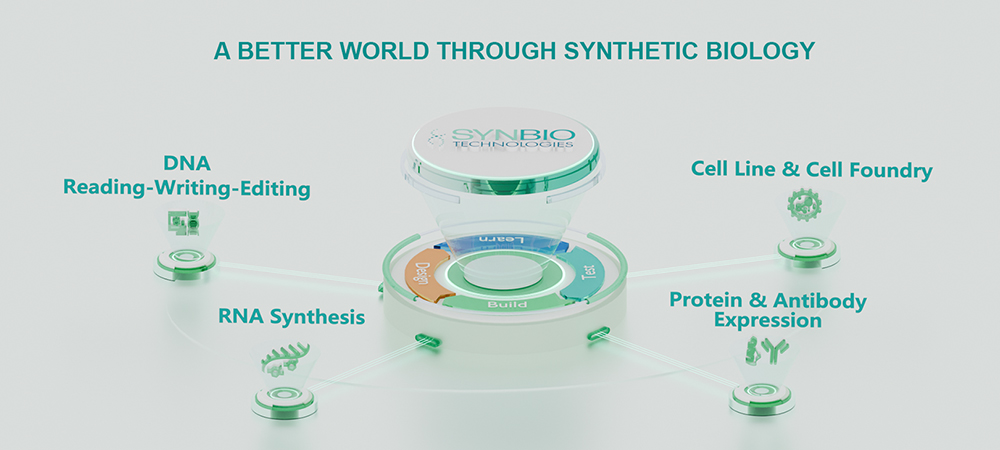
To close: weigh those three metrics against your project risk profile—rapid prototyping tolerates a different trade-off than regulated product development. I’ve seen these metrics cut rework by about 30% when applied consistently across vendors. One more aside: small labs can often save weeks by demanding clear QC reports up front (short-read coverage, percent mapped reads), and by trying enzymatic options for difficult sequences. I’ll keep testing new providers and sharing results. For practical sourcing and platform options, consider starting conversations with Synbio Technologies.