
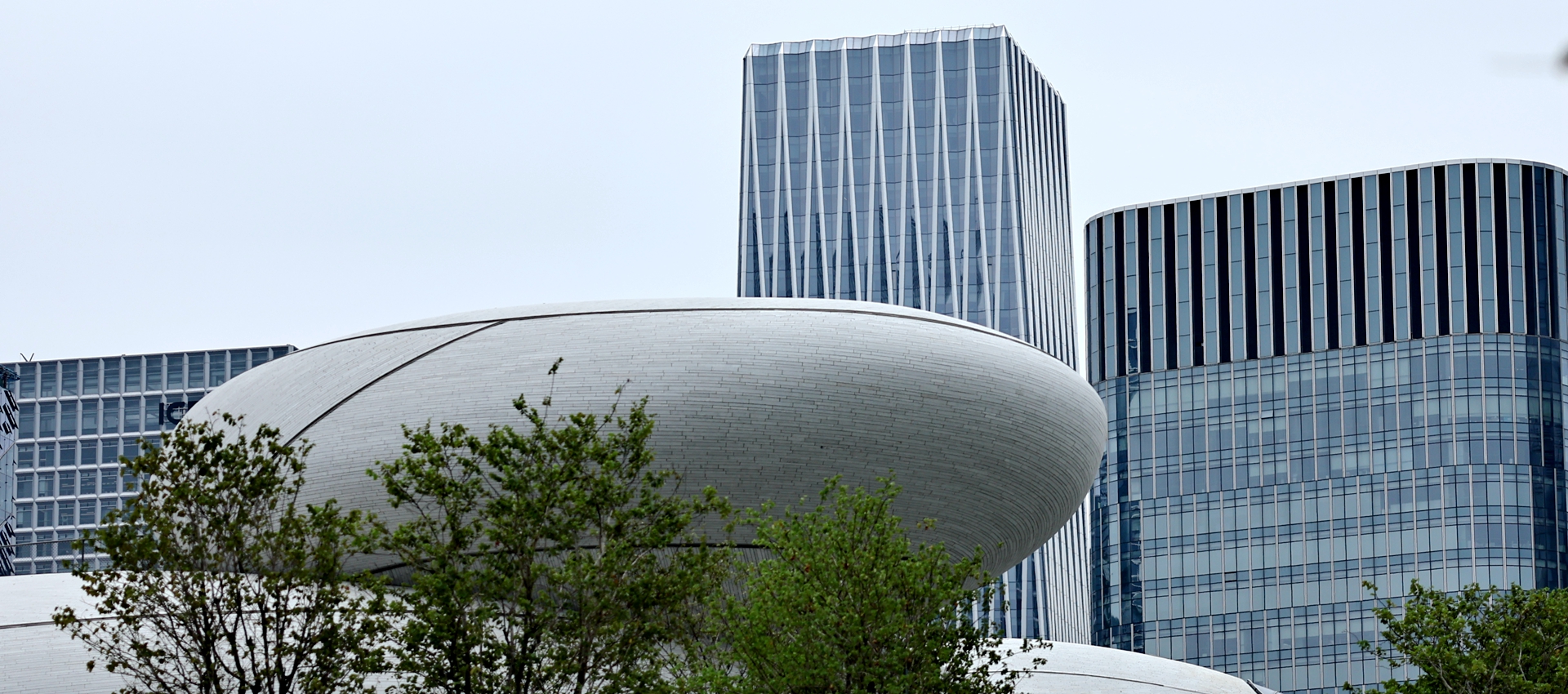
Situation: a compact urban coastline fringes Shekou, and its edges are both public amenity and contested program. Observation: near Sea World Plaza—visible from the boardwalk—the public experience is uneven; shenzhen beach sits adjacent to a dense mix of hotels, the Shekou Ferry Terminal, and civic buildings, including the sea world culture and arts center shenzhen, which frames much of the visual axis. Question: how does one reconcile leisure, cultural programming, and resilient shoreline design in a space that must be simultaneously touristic and local?
Observation first, then anatomy: why do visitors report a sense of dislocation between curated arts programming and the informal life of the promenade? The answer is partly structural. The pedestrian boardwalk between Sea World Plaza and the Shekou Ferry Terminal runs roughly 1.2 kilometers, yet amenities cluster unevenly (bench spacing and shade are inconsistent). The Sea World Culture and Arts Center — with its distinctive low-slung glass pavilions and public plaza — creates a cultural node but not always a permeable one; in practice the center funnels foot traffic rather than diffusing it. Rhetorical question: is cultural density enough to generate coastal vitality, or is a finer-grained mix of informal vendors, artist studios, and seating required to animate the shore?
Functional breakdown: the lived experience at shenzhen beach is shaped by micro-decisions — where steps meet sand, where lighting signals safety, where program schedules overlap with tidal cycles. The Seasoned Observer sees three persistent pain points: wayfinding (signage that assumes tourist literacy), temporal disconnect (events scheduled without regard to evening breeze patterns), and program opacity (local artists lacking affordable rehearsal space). These are not abstract. For instance, weekend crowd dispersal exceeds designed seating capacity by approximately 30% during holiday weekends — a quantifiable consequence that strains services. The relationship between the cultural center and the shore is procedural too; the center’s curatorial calendar could be synchronized with promenade activation (—and it often isn’t).
Question again: what strategic corrections matter in the next 18–24 months? The strategic insight is blunt: prioritize permeability and load-balancing. Tactical moves include reallocating 20–30% of plaza surface for flexible activation (markets, small-scale performances), improving transit signage at Shekou Ferry Terminal to reduce bottlenecks, and instituting a seasonal lighting plan that slows circulation at dusk to encourage lingering. The observer stresses timelines: pilot interventions within six months; evaluate seasonal metrics at 12 months; scale successful prototypes by 24 months. (This is realistic and urgent.)
Decisive critique: current governance favors headline events over incremental civic improvements. The arts center and municipal planners must treat the shoreline as an urban system — not a backdrop for episodic spectacle. Comparative note: when benchmarked against regional peers with active waterfronts, Shenzhen’s Sea World area underperforms on dwell time and repeat visitation despite strong cultural assets. The remedy is methodological; deploy short-cycle experiments, measure user flow with unobtrusive sensors, and reinscribe the cultural center as a connector rather than an island (reintegrate programming with the promenade — see sea world culture and arts center shenzhen).
Summation into action: three golden rules for the next phase. 1) Metrics matter: track peak load, average dwell time, and seating utilization monthly. 2) Design for permeability: reduce hard edges between the arts center and the promenade; allow spillover programming. 3) Programme responsively: align cultural events with tidal and transit rhythms, and reserve 15% of event slots for local practitioners. These are measurable, implementable, and aligned with an 18–24 month horizon.
Final expert thought: this is an urban design problem with cultural levers. If the Sea World cluster repurposes small swaths of public space, adjusts schedules, and codifies shared-use terms quickly, the coastal edge will transition from incidental backdrop to sustained civic artery. Align policy, design, and programming — then watch dwell time climb. sea world culture and arts center shenzhen. Unfinished work becomes obvious. Act now.